



Because of a lapse in government funding, the information on this website may not be up to date, transactions submitted via the website may not be processed, and the agency may not be able to respond to inquiries until appropriations are enacted. The NIH Clinical Center (the research hospital of NIH) is open. For more details about its operating status, please visit cc.nih.gov. Updates regarding government operating status and resumption of normal operations can be found at OPM.gov.
Thanks to the work of NEI scientists and grantees, we’re constantly learning new information about the causes and treatment of vision disorders. Get the latest updates about their work — along with other news about NEI.
A new study challenges the traditional understanding of disease genetics for IRDs and other rare genetic diseases according to the researchers, and may have implications for the clinical use of genetic testing and the development of new treatments.
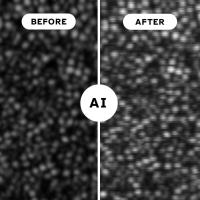
Getting the most advanced ophthalmic imaging technologies into the hands of healthcare providers will vastly improve the ability to detect retinal diseases earlier, and guide treatments to prevent vision loss.
A new National Eye Institute-funded study in mice shows that if the retina of the amblyopic eye is temporarily and reversibly anesthetized just for a couple of days, the brain’s visual response to the eye can be restored even in adulthood.
Ten teams are being recognized for their proof-of-concept ideas following Phase 1 of the Data Sharing Index (“S-Index”) Challenge, an NIH competition aimed at incentivizing data sharing
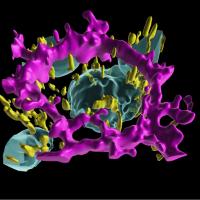
Research funded by the National Eye Institute has identified the signaling mechanism that triggers steroid-induced glaucoma by creating a 3D “eye-on-a-chip” platform that mimics the flow of ocular fluids.
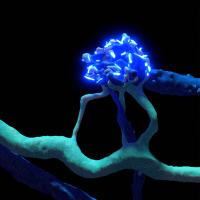
New research funded by the National Eye Institute at the University of California, Los Angeles has uncovered details about the muscle that controls blinking, offering a pathway toward developing blink-assisting prostheses.
A new study spearheaded by investigators at Scripps Research and the National Eye Institute offers compelling evidence that vision loss from macular telangiectasia can be slowed with a neuroprotective surgical implant.
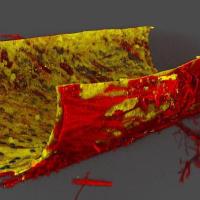
During most eye infections or injuries, neutrophils, immune cells found in the blood, are usually the first line of defense. However, new research shows retina responds differently than other tissues in the body.