Skip to content

NEI Research News

Thanks to the work of NEI scientists and grantees, we’re constantly learning new information about the causes and treatment of vision disorders. Get the latest updates about their work — along with other news about NEI.

Source
468 items
sugar

Study suggests sugary diet endangers waste-eating protein crucial to cellular repair

A protein that functions like the vintage video game Pac-Man, eating toxic cellular waste caused by high sugar intake, is itself compromised by a sugary diet, according to the results of a study in mice with potential implications for humans.

How the Brain Learns That Earmuffs Are Not Valuable at the Beach

A new study from the University of Tsukuba in Japan and the NEI reveals how the brain learns to place different values on objects depending on the environmental context.

A Rift in the Retina May Help Repair the Optic Nerve

In experiments in mouse tissues and human cells, Johns Hopkins Medicine researchers say they have found that removing a membrane that lines the back of the eye may improve the success rate for regrowing nerve cells damaged by blinding diseases.

A Niche for the Eye

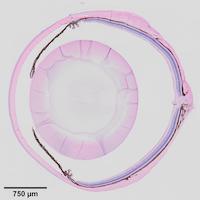
Research from the Stowers Institute suggests that the ciliary body might be key to detecting eye diseases before vision is impaired.

Tracing the many paths of vision

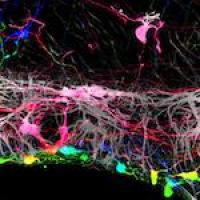
A team of scientists have created a molecular catalog that describes the different types of retinal ganglion cells in zebrafish, linking them to specific connections, functions, and behaviors.
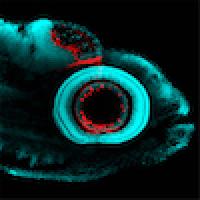
Slice through a 3D eye

Zika Virus Affects Eye Development Before But Not After Birth

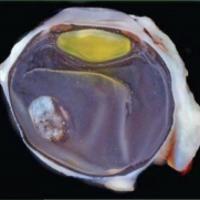
A new study has found that Zika infection during the first trimester of pregnancy can impact fetal retinal development and cause congenital ocular anomalies. The virus does not appear to affect ocular growth postnatally.
Slice of brain scan showing highlights in the cortex

NIH researchers discover brain area crucial for recognizing visual events

Researchers at the National Eye Institute (NEI) report that a brain region in the superior temporal sulcus (fSTS) is crucial for processing and making decisions about visual information.

Study in mice shows genes may be altered through drug repurposing

Researchers at the University of Illinois Chicago have published a study showing a promising approach to using drug repurposing to treat genetic diseases.

New approach reveals structure and function of individual synapses

An interdisciplinary team of scientists at the Max Planck Florida Institute for Neuroscience have developed a novel approach to measure the activity and strength of individual synapses that drive a neuron’s response to sensory input.

Researchers Discover Clue to How to Protect Neurons and Encourage Their Growth

A multi-university team identified a family of enzymes called GCK-IV kinases whose inhibition is robustly neuroprotective, while also permitting axon regeneration.