Thanks to the work of NEI scientists and grantees, we’re constantly learning new information about the causes and treatment of vision disorders. Get the latest updates about their work — along with other news about NEI.
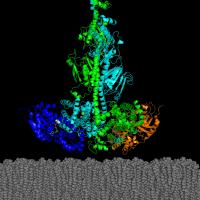
Researchers at the University of New Hampshire have reported the first structural model for a key enzyme, and its activating protein, that can play a role in some genetically inherited eye diseases like retinitis pigmentosa and night blindness.
In a recent study using mice, lab-grown human retinal cells and patient samples, Johns Hopkins Medicine scientists say they found evidence of a new pathway that may contribute to degeneration of the light sensitive tissue at the back of the eye.
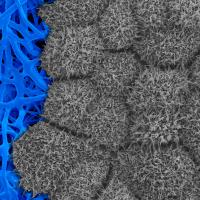
Researchers used artificial intelligence (AI) to evaluate stem cell-derived “patches” of retinal pigment epithelium (RPE) tissue for implanting into the eyes of patients with age-related macular degeneration (AMD), a leading cause of blindness.
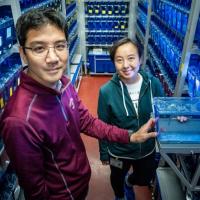
Researchers studying zebrafish have found that genes linked to autism spectrum disorder and other developmental brain abnormalities may be playing a role in people who cannot control their eye movements.
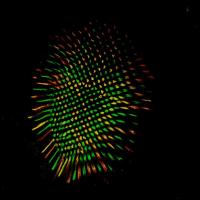
Researchers at Baylor College of Medicine and the University of Tübingen in Germany have developed a novel computational approach to finding stimuli that neurons in the brain ‘like.’
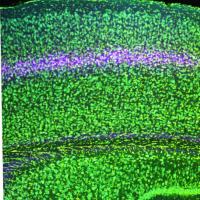
Researchers at the Salk Institute and UC San Diego discover a way to make electron microscopy more detailed and precise by visualizing the activation of brain circuits over long distances.