Thanks to the work of NEI scientists and grantees, we’re constantly learning new information about the causes and treatment of vision disorders. Get the latest updates about their work — along with other news about NEI.
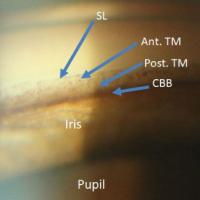
Using methods originally developed by astronomers to view stars more clearly through Earth's atmosphere, optometry researchers at Indiana University have taken the first undistorted microscopic images of a part of the eye involved in glaucoma.
Researchers at the Max Planck Florida Institute for Neuroscience uncovered a diverse palette of inhibition within layer 2/3 of the visual cortex, suggestive of a more complex functional connectivity that may allow for enhanced flexibility of...
Biomedical engineers at Duke University have devised a method for increasing the resolution of optical coherence tomography (OCT) down to a single micrometer scale in all directions.
Targeting specific areas of the measles virus polymerase, a protein complex that copies the viral genome, can effectively fight the measles virus and be used as an approach to developing new antiviral drugs to treat the serious infectious disease...
People who spend eight or more hours a day staring at a computer screen may notice their eyes becoming tired or dry, and, if those conditions are severe enough, they may eventually develop dry eye disease (DED).
Retinitis pigmentosa (RP) is a common hereditary eye disorder that leads to the gradual deterioration of rod cells causing reduced peripheral vision and night vision. Subsequent loss of cone photoreceptors cause the loss of high-resolution daylight...
A large-scale, collaborative, systems biology approach is needed to expedite the discovery of treatments for dry age-related macular degeneration (AMD) – a leading cause of blindness among people 65 and older for which is there is no treatment.
As we age, our eyes lose their ability to focus up close. It’s a condition called presbyopia, and it’s both extremely common and relatively easy to fix, with solutions like reading glasses, bifocals, or progressive lenses.