Los Institutos Nacionales de la Salud (NIH) están posponiendo el lanzamiento de su nuevo sitio web hasta el otoño para garantizar la mejor experiencia posible para todas las personas que utilizan nuestros sitios web para obtener información sobre la salud, investigación, oportunidades de financiamiento y otros recursos. Consulta las últimas actualizaciones y las preguntas frecuentes (disponibles en inglés).
Thanks to the work of NEI scientists and grantees, we’re constantly learning new information about the causes and treatment of vision disorders. Get the latest updates about their work — along with other news about NEI.
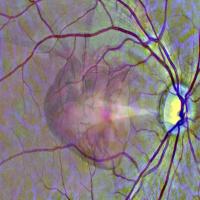
In a preliminary study, Johns Hopkins Medicine researchers report that as many as a third of those with "wet" age-related macular degeneration may someday be able to safely stop eye injection therapy without further vision loss.
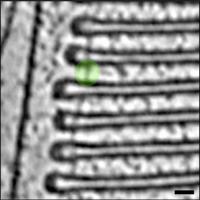
Scientists at St. Jude Children’s Research Hospital identified distinct functions for regions of a super-enhancer that controls gene expression during retina formation, calling it a ‘modular’ super-enhancer.
Researchers at the National Eye Institute (NEI) have developed the first patient-derived stem cell model for studying eye conditions related to oculocutaneous albinism (OCA).
Using a stem-cell-derived model, researchers have identified two drug candidates that may slow dry age-related macular degeneration (AMD), a leading cause of blindness for which no treatment exists.
School of Medicine researchers have made a discovery linking lupus, a potentially debilitating autoimmune disorder, and macular degeneration, a leading cause of blindness.
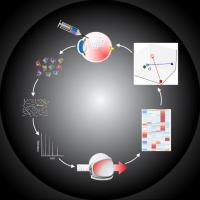
Scientists have discovered that gene therapy and the diabetes drug metformin may be potential treatments for late-onset retinal degeneration (L-ORD), a rare, blinding eye disease.
In a new study, the researchers show that immune cells respond to the lens, not just following an acute injury in the eye, but also to long-lasting inflammation.