Los Institutos Nacionales de la Salud (NIH) están posponiendo el lanzamiento de su nuevo sitio web hasta el otoño para garantizar la mejor experiencia posible para todas las personas que utilizan nuestros sitios web para obtener información sobre la salud, investigación, oportunidades de financiamiento y otros recursos. Consulta las últimas actualizaciones y las preguntas frecuentes (disponibles en inglés).
Thanks to the work of NEI scientists and grantees, we’re constantly learning new information about the causes and treatment of vision disorders. Get the latest updates about their work — along with other news about NEI.
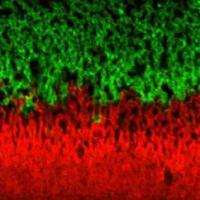
A gene therapy protects eye cells in mice with a rare disorder that causes vision loss, especially when used in combination with other gene therapies, shows a study published in eLife.
LambdaVision, the Farmington, Connecticut-based biotech firm that developed the artificial retina, is exploring optimizing production of an artificial retina in space, in a series of missions to the International Space Station.
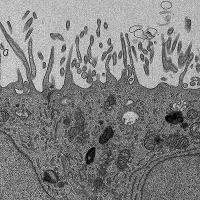
Using laboratory-grown roundworms as well as human and mouse eye tissue, researchers have identified a new potential mechanism for age-related macular degeneration—the leading cause of blindness among older adults.
Scientists at the University of Pennsylvania School of Veterinary Medicine report findings of a gene therapy to treat a severe form of Leber congenital amaurosis, caused by mutations in the NPHP5 gene.
Early treatment with anti-VEGF injections slowed diabetic retinopathy in a clinical study from the DRCR Retina Network (DRCR.net). However, two years into the four-year study its effect on vision was similar to standard treatment.
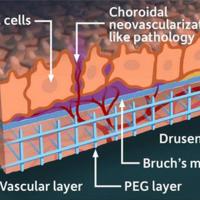
NEI-funded research at the University of Rochester has led to the development of a 3D lab model that mimics the part of the human retina affected in age-related macular degeneration.
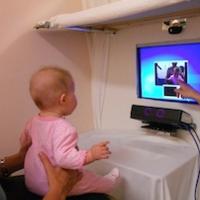
While it isn’t surprising that infants and children love to look at people’s movements and faces, recent research from Rochester Institute of Technology studies exactly where they look when they see someone using sign language.
NEI-funded research at Scripps Research Institute has turned up more than a dozen gene variants linked to MacTel, a rare eye disease. The variants are likely causing the condition to develop and worsen for a significant share of patients.