Los Institutos Nacionales de la Salud (NIH) están posponiendo el lanzamiento de su nuevo sitio web hasta el otoño para garantizar la mejor experiencia posible para todas las personas que utilizan nuestros sitios web para obtener información sobre la salud, investigación, oportunidades de financiamiento y otros recursos. Consulta las últimas actualizaciones y las preguntas frecuentes (disponibles en inglés).
Thanks to the work of NEI scientists and grantees, we’re constantly learning new information about the causes and treatment of vision disorders. Get the latest updates about their work — along with other news about NEI.
Today, the National Academies of Sciences, Engineering, and Medicine (the National Academies) released “Making Eye Health A Population Health Imperative: Vision for Tomorrow.
Combinations of Food and Drug Administration-approved drugs protect against the loss of cells required for vision in a mouse model of blinding retinal diseases.
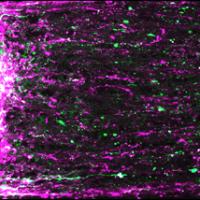
A study in mice funded by the National Institutes of Health (NIH) shows for the first time that high-contrast visual stimulation can help damaged retinal neurons regrow optic nerve fibers, otherwise known as retinal ganglion cell axons.
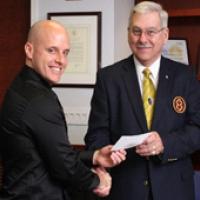
NEI research fellow Nathan Hotaling, PhD, has been awarded a $65,000 grant from the Knights Templar Eye Foundation to develop a stem cell-based system to study Best disease, a genetic disorder that can cause progressive vision loss.
A pain medicine that potently activates a receptor vital to a healthy retina appears to help preserve vision in an animal model of severe retinal degeneration, NEI-funded scientists at Medical College of Georgia at Augusta University report.
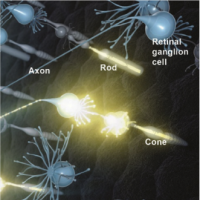
Retinas from our earliest vertebrate ancestors had cone-like photoreceptors, presumably allowing them to see in daylight, but little ability to see at night.