
Research led by Nicolas Bazan, MD, PhD, at LSU Health New Orleans School of Medicine, suggests that age-related macular degeneration (AMD) decreases an essential fatty acid, preventing the formation of a class of protective molecules and reducing repair potential. The discovery may also open new therapeutic avenues for AMD.
The study shows that AMD decreases peripheral retinal docosahexaenoic acid (DHA) 22:6 in rod photoreceptor cells, limiting the elongation of fatty acids to form very-long-chain polyunsaturated fatty acids (VLC-PUFAs). VLC-PUFAs are precursors of elovanoids, bioactive chemical messengers made from omega-3 very- long-chain polyunsaturated fatty acids. Elovanoids, discovered by the Bazan lab, have been shown to restore the structure and integrity of damaged photoreceptor cells by repairing, remodeling and regenerating healthy cells. The loss of the neuroprotective precursors of elovanoids in the retina periphery from AMD facilitates uncompensated stress and cell loss.
The research team also found major differences between genders.
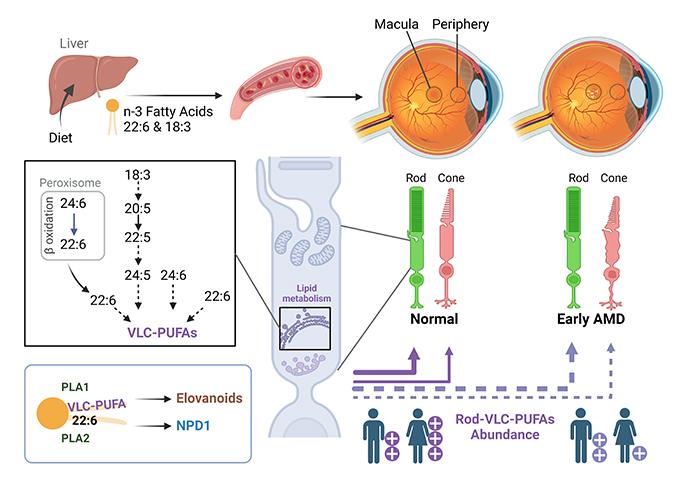
Image credit: LSU Health New Orleans