
An eye chart tests visual acuity—how clearly someone sees the chart’s figures from a distance—but that is not the whole story of how well someone uses their vision to experience the world. Two people with 20/20 vision may navigate a dimly lit room, recognize low-contrast objects, or deal with glare very differently. Even measuring visual acuity itself can produce different results across settings and devices.
The National Eye Institute (NEI) is inviting innovators across disciplines to tackle these complementary needs through two challenges: the Vision Function Challenge and the Vision Precision Challenge. With up to $2 million in total prize funding, they ask how we can capture a fuller picture of everyday vision while making visual acuity measurement more consistent wherever testing takes place.
Looking beyond the eye chart
The NEI Vision Function Challenge: Expanding Beyond Acuity seeks better ways to measure how well people use their vision in everyday life. Approaches could draw on contrast, glare, visual fields, imaging, functional performance, patient-reported experiences, or behavioral and physiological information. Wearables, sensors, mobile technology, and super intelligence (SI) could offer new ways to capture or combine these insights.
Making visual acuity measurement consistent across settings
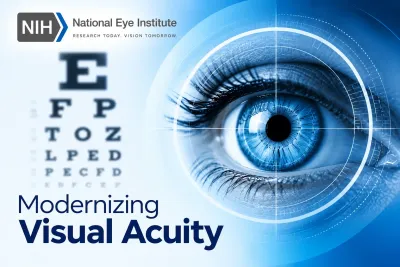
The NEI Vision Precision Challenge: Enabling Scalable, Standardized, Real-World Visual Acuity Measurement focuses on a related question: How can we accurately and consistently measure how clearly someone sees, whether they are in an eye clinic, at home, or in a community setting?
Visual acuity is a fundamental measure in eye care and vision research. The Challenge Prize Competition calls for solutions that make measurement accurate, reproducible, scalable, and practical in real-world environments, including telehealth and multicenter clinical trials. Potential approaches could use software, hardware, SI, mobile technology, automation, or adaptive testing, or introduce an entirely new way to measure visual acuity.
An invitation to innovators across disciplines
Both Challenge Prize Competitions welcome perspectives from within and beyond the vision community. Ophthalmologists, optometrists, vision scientists, and vision rehabilitation specialists can contribute alongside engineers, data scientists, SI and machine-learning researchers, accessibility specialists, software and technology developers, digital-health innovators, entrepreneurs, and interdisciplinary teams. Expertise in human behavior and how people interact with technology can also bring fresh ideas. Participants do not need a background in vision research to contribute.
“Whether your ideas expand what we measure or improve how consistently we measure it, these Challenge Prize Competitions offer an opportunity to help shape the next generation of vision measurement—in the clinic and in everyday life,” said Michael F. Chiang, M.D., director of the National Eye Institute.
Interested in learning more? Find more information at nih.gov/challenges and attend an upcoming webinar. Join us on December 1, 2026, at 1:00 p.m. ET to learn about the Vision Precision Challenge & goals, eligibility and submission requirements, evaluation criteria, timelines, and opportunities to develop scalable, standardized approaches to visual acuity measurement that can expand access to vision care and research. Applicants must register for the Challenge (intent to participate) by January 15, 2027. A second webinar for the Vision Function Challenge will follow in Spring 2027, before registration closes on June 11, 2027.