Skip to content

NEI Research News

Thanks to the work of NEI scientists and grantees, we’re constantly learning new information about the causes and treatment of vision disorders. Get the latest updates about their work — along with other news about NEI.

Source
25 items
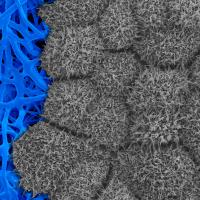
Image of scanning electron micrograph

NIH, NIST researchers use artificial intelligence for quality control of stem cell-derived tissues

Researchers used artificial intelligence (AI) to evaluate stem cell-derived “patches” of retinal pigment epithelium (RPE) tissue for implanting into the eyes of patients with age-related macular degeneration (AMD), a leading cause of blindness.
A scanning electron micrograph image shows a polarized RPE monolayer on a biodegradable scaffold. The image is colored to highlight the scaffold in blue, three RPE cells (brown), and the apical processes of cells in RPE monolayer are light green.

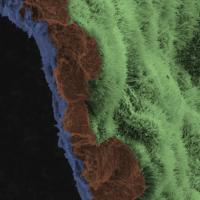
NIH researchers rescue photoreceptors, prevent blindness in animal models of retinal degeneration

Using a novel patient-specific stem cell-based therapy, researchers at the National Eye Institute (NEI) prevented blindness in animal models of geographic atrophy, the advanced “dry” form of age-related macular degeneration (AMD)...

NIH discovery brings stem cell therapy for eye disease closer to the clinic

Scientists at the National Eye Institute (NEI) report that tiny tube-like protrusions called primary cilia on cells of the retinal pigment epithelium (RPE) are essential for the survival of the retina’s light-sensing photoreceptors.
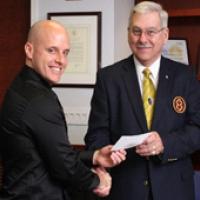
James W. Gollady, Jr., Right Eminent Department Commander (right), presents Hotaling with a check from the Knights Templar Eye Foundation. “I think this award is extremely important to pave a pathway for me in medical research,” said Hotaling.  (Joe Balintfy, NEI)

NEI Scientist Receives Research Grant from Knights Templar Eye Foundation

NEI research fellow Nathan Hotaling, PhD, has been awarded a $65,000 grant from the Knights Templar Eye Foundation to develop a stem cell-based system to study Best disease, a genetic disorder that can cause progressive vision loss.
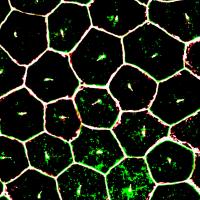
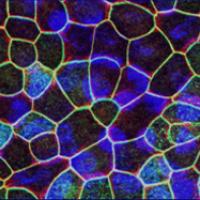
Retinal pigment epithelium derived from induced pluripotent stem cells. Photo credit: Dr. Kapil Bharti.

Gene profiling technique to accelerate stem cell therapies for eye diseases

Researchers at the National Institutes of Health have developed a technique that will speed up the production of stem-cell derived tissues.