Beginning in late July, NIH will start introducing a new website experience designed to make it easier to find health information, research, funding opportunities, and other resources. During the transition, you may notice changes to navigation, page layouts, and where some information is located. Learn more in our Frequently Asked Questions.
Thanks to the work of NEI scientists and grantees, we’re constantly learning new information about the causes and treatment of vision disorders. Get the latest updates about their work — along with other news about NEI.
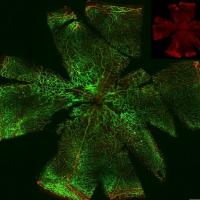
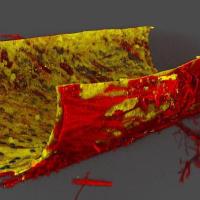
NEI-funded research at Duke University used induced pluripotent stem cells (iPSCs) to grow specialized blood vessel cells critical to retinal health for the first time.
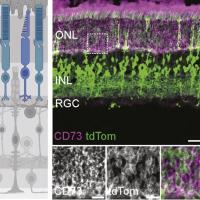
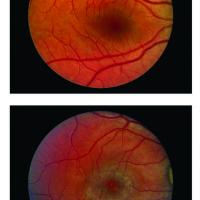
A study conducted by Scripps Research in collaboration with University of California San Diego and the Lowy Medical Research Institute finds that erucamide plays a role in how cells communicate in the retina.
A new understanding of retinal cell development may help pave the way for future retina transplants, which could restore sight to people whose conditions currently have no effective treatments
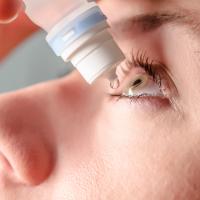
National Eye Institute-funded research at the University of Pittsburgh School of Medicine showed that an early-stage, experimental “living eye drop” that uses naturally occurring eye bacteria supports corneal wound healing.
A new study challenges the traditional understanding of disease genetics for IRDs and other rare genetic diseases according to the researchers, and may have implications for the clinical use of genetic testing and the development of new treatments.
A new National Eye Institute-funded study in mice shows that if the retina of the amblyopic eye is temporarily and reversibly anesthetized just for a couple of days, the brain’s visual response to the eye can be restored even in adulthood.
Research funded by the National Eye Institute has identified the signaling mechanism that triggers steroid-induced glaucoma by creating a 3D “eye-on-a-chip” platform that mimics the flow of ocular fluids.
New research funded by the National Eye Institute at the University of California, Los Angeles has uncovered details about the muscle that controls blinking, offering a pathway toward developing blink-assisting prostheses.
A new study spearheaded by investigators at Scripps Research and the National Eye Institute offers compelling evidence that vision loss from macular telangiectasia can be slowed with a neuroprotective surgical implant.