Skip to content

NEI Research News

Thanks to the work of NEI scientists and grantees, we’re constantly learning new information about the causes and treatment of vision disorders. Get the latest updates about their work — along with other news about NEI.

Source
179 items

NIH researchers supercharge ordinary clinical device to get a better look at the back of the eye

Scientists at the National Institutes of Health (NIH) have leveraged artificial intelligence to transform a device designed to see tissues in the back of the eye into one sharp enough to make out individual cells.

NEI-funded researchers test new visual prosthesis system to restore vision

Brown University researchers have identified a promising new approach that may help to restore vision in people affected by macular degeneration and other retinal disorders.

Repurposing a high blood pressure drug may prevent vision loss in inherited blinding diseases

New studies in rats suggest the drug reserpine, approved in 1955 for high blood pressure, might treat the blinding disease retinitis pigmentosa. No therapy exists for this rare inherited disease, which starts affecting vision from childhood.
blank

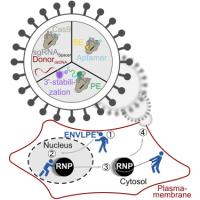
NEI-funded researchers “push the ENVLPE” with new virus-like particle to fix mutations causing blindness

New CRISPR gene editing approach may also be useful for treating other inherited diseases, such as cystic fibrosis and familial hypercholesterolemia

NIH researchers develop eye drops that slow vision loss in animals

Researchers at the National Institutes of Health (NIH) have developed eye drops that extend vision in animal models of a group of inherited diseases that lead to progressive vision loss in humans, known as retinitis pigmentosa.
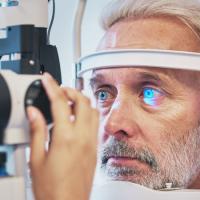
Man getting eye exam

Glaucoma monitoring lags in low-income and rural areas

Northwestern study finds ‘alarming’ disparities — lack of glaucoma care can lead to blindness.
Head-mounted robotic device for eye surgery.

Early study shows promise for retinal-surgery robot invented at the University of Utah

Researchers create a new robotic surgery device that aims to give surgeons “superhuman” hands, accounting for patients’ breathing and eye movements, along with their own involuntary hand tremors, while they work on retinal tissues.

NEI study: New take on old marker of cell death

New findings from a National Eye Institute-led study add a twist on how a widely used cell death marker, annexin-V, can be interpreted in the lab and the clinic for tracking retinal cell death in eye diseases such as glaucoma.
Eye illustration

ARPA-H announces funding for development of eye transplantation

ARPA-H announced the teams to receive awards from its Transplantation of Human Eye Allografts (THEA) program.

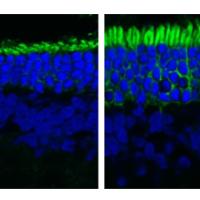
CRISPR gene editing promising for blinding disease retinitis pigmentosa

National Eye Institute-funded scientists using gene editing corrected a mutation in a mouse model of retinitis pigmentosa, an inherited blinding eye disorder. The gene editing strategy restored production of rhodopsin, and retinal function and structure