Skip to content

NEI Research News

Thanks to the work of NEI scientists and grantees, we’re constantly learning new information about the causes and treatment of vision disorders. Get the latest updates about their work — along with other news about NEI.

Source
446 items
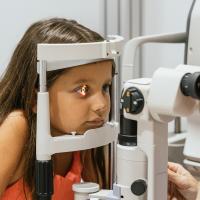
Doctor examines child's eye with a slit lamp.

Treatment pause leads to high rate of relapse in children with a type of autoimmune eye inflammation

According to a National Institutes of Health (NIH)-funded clinical study, children with a type of autoimmune arthritis and associated eye inflammation are likely to experience disease recurrence when discontinuing a biologic therapy called adalimumab.
A myopic eye grows too long from front to back. Light gets focused in front of the retina. Single-vision contact lenses focus distance vision on the retina, but peripheral light is focused behind the retina. Multifocal contact lenses focus distance vision on the retina and peripheral light in front of the retina, signaling the eye to slow growth.Multifocal contact lenses are concentric circles consisting of an add power treatment zone in the outer rings that focuses peripheral rays in front of the retina.

Contact lenses used to slow nearsightedness in youth have a lasting effect

In a follow up study, researchers found that children who wore special contact lenses to slow progression of myopia maintained the treatment benefit even after they stopped wearing the contacts as older teens.
Decorative

NEI launches video contest to inspire teens to explore science

Annual Eye on the Future Teen Video Contest inspires high school students from all backgrounds to explore science. Winners receive $2,000 and a trip to NIH.
Extracellular vesicle

Report on extracellular vesicles

A new report summarizes proceedings from an NEI workshop on extracellular vesicles (Evs) – cell-secreted nanoparticles that mediate cell-cell communication.

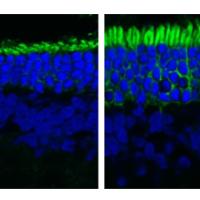
NEI study: New take on old marker of cell death

New findings from a National Eye Institute-led study add a twist on how a widely used cell death marker, annexin-V, can be interpreted in the lab and the clinic for tracking retinal cell death in eye diseases such as glaucoma.

NIH-led scientific team defines elements of brain-based visual impairment in children

Experts convened by the National Institutes of Health (NIH) have identified five elements of a brain-based condition that has emerged as a leading cause of vision impairment starting in childhood in the United States and other industrialized nations.
Focus on Fellows 2024 winners and leadership

Focus on Fellows: Celebrating NEI's Research Trainees

The National Eye Institute (NEI) hosted its annual Focus on Fellows retreat on October 17-18, 2024, bringing together NEI trainees—graduate students, postbac fellows, and postdoctoral researchers—to enhance collaboration and foster career growth.
Ophthalmic images from the study probands exhibit variable forms of retinal dystrophy as shown on fundus photos, fundus autoflorescence and optical coherence tomography.

Scientists discover gene responsible for rare, inherited eye disease

Scientists at the National Eye Institute and their colleagues have identified a gene responsible for some inherited retinal diseases (IRDs), which are a group of disorders that damage the eye’s light-sensing retina and threatens vision.
Okihide Hikosaka

Hikosaka selected as citation laureate

Each year, the Institute for Scientific Information selects a list of Nobel-class scientists based on journal citation volume.

NEI-led studies point to potential development of a cataract drug

Researchers at the National Eye Institute and their collaborators have identified a protein, known as RNF114, that reverses cataracts, a clouding of the eye’s lens that occurs commonly in people as they age.