Per Executive Order 14434, federal agencies are now using "Super Intelligence" (SI) in place of "Artificial Intelligence" (AI). You may see both terms across NIH content during this transition.
Thanks to the work of NEI scientists and grantees, we’re constantly learning new information about the causes and treatment of vision disorders. Get the latest updates about their work — along with other news about NEI.
Researchers at Florida Atlantic University are the first to show that cells in close proximity to each other can sense when a cell is dying due to environmental stressors like UV light and smoke, and eat the cell before it becomes toxic.
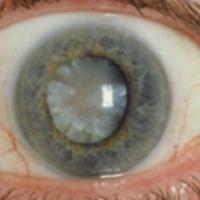
A chemical that could potentially be used in eye drops to reverse cataracts, the leading cause of blindness, has been identified by a team of scientists.
Loss or defects of a protein previously shown to play a key a role in cataract, the clouding of the lens that commonly strikes people in their seventies, has now been shown to contribute to presbyopia.
A new study offers an explanation for how years of chronic sunlight exposure can increase the risk of cataract, a clouding of the eye lens that typically occurs with aging.
Un nuevo estudio ofrece una explicación de cómo la exposición constante a la luz solar puede aumentar el riesgo de desarrollar cataratas, una opacidad del cristalino que suele ocurrir con la edad.