Thanks to the work of NEI scientists and grantees, we’re constantly learning new information about the causes and treatment of vision disorders. Get the latest updates about their work — along with other news about NEI.
Early treatment with anti-VEGF injections slowed diabetic retinopathy in a clinical study from the DRCR Retina Network (DRCR.net). However, two years into the four-year study its effect on vision was similar to standard treatment.
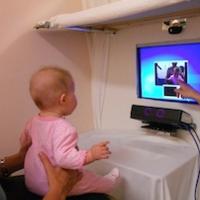
While it isn’t surprising that infants and children love to look at people’s movements and faces, recent research from Rochester Institute of Technology studies exactly where they look when they see someone using sign language.
NEI-funded research at Scripps Research Institute has turned up more than a dozen gene variants linked to MacTel, a rare eye disease. The variants are likely causing the condition to develop and worsen for a significant share of patients.
A team led by scientists at the National Eye Institute (NEI) has noninvasively visualized the light-sensing cells in the back of the eye, known as photoreceptors, in greater detail than ever before.
Scientists at the National Eye Institute (NEI) have developed a promising gene therapy strategy for a rare disease that causes severe vision loss in childhood.
Researchers from UW Medicine have found that artificial intelligence-based screening algorithms to diagnose diabetic retinopathy do not perform as well as they claim.
Scientists at Joslin Diabetes Center now have shown that routine eye imaging can identify changes in the retina that may be associated with cognitive disorders in older people with type 1 diabetes.
The IQA is a software system intended for use in importing, displaying, analyzing and managing images acquired with digital fundus cameras. The patented software detects the most common causes of retinal imaging artifacts.
Children who undergo cataract surgery as infants have a 22% risk of glaucoma 10 years later, whether or not they receive an intraocular lens implant. The findings come from the National Eye Institute (NEI)-funded Infant Aphakic Treatment Study.
Surgical and injectable drug approaches are equally effective for treatment of bleeding inside the eye from proliferative diabetic retinopathy (PDR), according to a National Eye Institute (NEI)-supported clinical study from the DRCR Retina Network .