Thanks to the work of NEI scientists and grantees, we’re constantly learning new information about the causes and treatment of vision disorders. Get the latest updates about their work — along with other news about NEI.
UVA Health scientists have discovered an unknown contributor to harmful blood vessel growth in the eye that could lead to new treatments for blinding macular degeneration and other common causes of vision loss.
Researchers at the University of North Texas Health Science Center are the first to characterize extracellular vesicles in the tears of patients with keratoconus.
In a study from the Picower Institute at MIT, the first detailed mapping and modeling of thalamus inputs onto visual cortex neurons show brain leverages “wisdom of the crowd” to process sensory information.
Studying mice, researchers at Washington University School of Medicine in St. Louis have found that proteins made by stem cells that regenerate the cornea may be new targets for treating and preventing corneal injuries in people with dry eye.
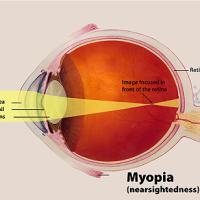
Myopia is a leading cause of vision impairment worldwide and is growing in prevalence, this study aims to provide a deeper understanding of the biology of myopia that will lead to new and more effective treatments.
A team of engineers and neuroscientists has demonstrated for the first time that human brain organoids implanted in mice have established functional connectivity to the animals’ cortex and responded to external sensory stimuli.
Research from University of Michigan scientists reveals Vegf-Notch signaling system that is activated in the injured retina, gives Muller glia stem cell properties.