Skip to content

NIH Websites Are Changing

NEI Research News

Thanks to the work of NEI scientists and grantees, we’re constantly learning new information about the causes and treatment of vision disorders. Get the latest updates about their work — along with other news about NEI.

Source
299 items
Fundus photo showing medium drusen

VisionQuest Gains FDA 510(k) Clearance for the Image Quality Analyzer Software

The IQA is a software system intended for use in importing, displaying, analyzing and managing images acquired with digital fundus cameras. The patented software detects the most common causes of retinal imaging artifacts.
Image shows eye globe, optic nerve, lens, cornea, pupil, meshwork, angle, and where fluid forms and exits the front of the eye.

Cataract surgery in infancy increases glaucoma risk

Children who undergo cataract surgery as infants have a 22% risk of glaucoma 10 years later, whether or not they receive an intraocular lens implant. The findings come from the National Eye Institute (NEI)-funded Infant Aphakic Treatment Study.

Surgical and drug treatment options lead to similar outcomes for diabetic eye disease

Surgical and injectable drug approaches are equally effective for treatment of bleeding inside the eye from proliferative diabetic retinopathy (PDR), according to a National Eye Institute (NEI)-supported clinical study from the DRCR Retina Network .
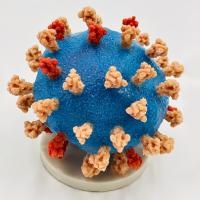
3D printed model of Sars-CoV-2

COVID-19 Found in The Cornea: Are Transplants a Transmission Risk?

A multi-institutional study finds that COVID-19 can be found in post-mortem corneal tissue, highlighting the importance of the donor screening process.
Stem cell illustration

New stem cell technique offers hope for those with corneal damage

Harvard Medical School surgeons at Massachusetts Eye and Ear have replaced the ocular surface of four patients who each experienced chemical burns to one eye.
person leaping across rock crevice. Credit: Sammie Vasquez Upsplash

Scientists Identify the Cognitive Limitations that Hamper Our Decision-Making

How do we weigh risks? A new study from New York University and Peking University found that our cognitive limitations distort our notions of probability.

Multifocal contact lenses slow myopia progression in children

Children wearing multifocal contact lenses had slower progression of their myopia, according to results from a clinical trial funded by the National Eye Institute, part of the National Institutes of Health.
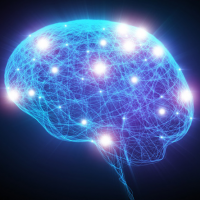
An illustration of a human brain with stimulated neurons.

Study helps to settle debate on roles of REM and non-REM sleep in visual learning

A study by a team of Brown University researchers sheds new light on the complementary roles of REM and non-REM sleep in visual perceptual learning.
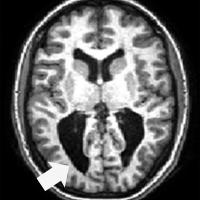
Cross-section of fMRI brain scan with arrow pointing to dark area

Vision loss in children whose eyesight may be 20/20 requires new diagnostic and teaching strategies

Cerebral (cortical) visual impairment (CVI) is a condition that interferes with the ability of the brain to process information from the eyes, and it has become a leading cause of visual impairment in the U.S.
Different colored dots in a circle used for a color plate test

Study finds that special filters in glasses can help the color blind see colors better

A new study found that special patented glasses engineered with technically advanced spectral notch filters enhance color vision for those with the most common types of red-green color vision deficiency (“anomalous trichromacy”).