Thanks to the work of NEI scientists and grantees, we’re constantly learning new information about the causes and treatment of vision disorders. Get the latest updates about their work — along with other news about NEI.
Researchers at Columbia University Irving Medical Center have developed eye drops that could prevent vision loss after retinal vein occlusion, a major cause of blindness for millions of adults worldwide.
Researchers from the University of Buffalo have found new information about retinitis pigmentosa, a condition that begins in childhood with night blindness and loss of peripheral vision.
Researchers who made a knock-in mouse-model of the genetic disorder retinitis pigmentosa 59, or RP59, found no retinal degeneration or thinning, calling into question the commonly accepted mechanism for RP59.
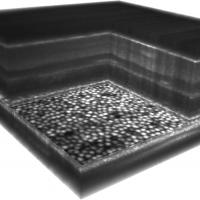
Biomedical engineers at Duke University have devised a new imaging device capable of measuring the various layers of the retina at the back of the eye, which could be used to detect Alzheimer's disease.
In a novel approach to gene therapy, scientists funded by the National Eye Institute (NEI) report using gold nanoparticles and light to target specific cells in mouse retina.
New research, led by Northwestern University, has found that a subset of retinal neurons sends inhibitory signals to the brain. Before, researchers believed the eye only sends excitatory signals.
Babies born prematurely who require treatment to prevent blindness from retinopathy of prematurity (ROP) could be treated with a dose of Avastin (bevacizumab) that is a fraction of the dose commonly used for ROP currently.
Researchers have discovered a technique for directly reprogramming skin cells into light-sensing rod photoreceptors used for vision. The lab-made rods enabled blind mice to detect light after the cells were transplanted into the animals’ eyes.
Nicotinamide, a form of vitamin B3, can inhibit aggressive cell transformations during wound healing and may be key to the development of therapies to treat fibrotic eye diseases that impair vision.
A protein that normally deposits mineralized calcium in tooth enamel may also be responsible for calcium deposits in the back of the eye in people with dry age-related macular degeneration (AMD).