Skip to content

NEI Research News

Thanks to the work of NEI scientists and grantees, we’re constantly learning new information about the causes and treatment of vision disorders. Get the latest updates about their work — along with other news about NEI.

Source
472 items
Ants

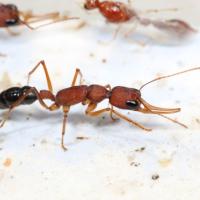
Anti-insulin protein linked to longevity and reproduction in ants

An insulin-suppressing protein may be the fountain of youth for ants and provides clues about aging in other species, according to a study led by New York University researchers.
Long distance connections in the brain.

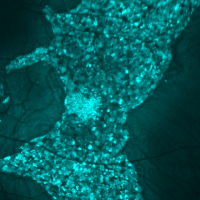
New method enables long-lasting imaging of rapid brain activity in individual cells deep in the cortex

Scientists at Baylor College of Medicine and collaborating institutions report a new sensor that allows neuroscientists to image brain activity without missing signals, for an extended time and deeper in the brain than previously possible.
A 3D readout of a protein gel.

Baylor Study Combines Lithophane, 3D Printing to Make Scientific Data Accessible to Everyone Regardless of Level of Eyesight

Scientists use old-fashioned art form and 3D printing to make major advance in eliminating exclusion of individuals with blindness or low vision from chemistry and other life sciences.
Photoreceptor precursors

Progress toward a stem cell–based therapy for blindness

A multi-institutional effort led by researchers at the UPenn School of Veterinary Medicine is taking steps to develop an effective technique to regenerate photoreceptors cells and restore sight in people with vision disorders.
Image of retina

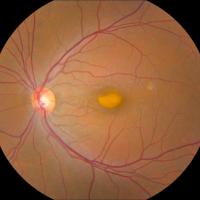
High-tech imaging reveals details about rare eye disorder

Using a new imaging technique, researchers from the National Eye Institute have determined that retinal lesions from vitelliform macular dystrophy (VMD) vary by gene mutation.

NIH study finds loss of ‘youth’ protein may drive aging in the eye

Loss of the protein pigment epithelium-derived factor (PEDF), which protects retinal support cells, may drive age-related changes in the retina, according to a new study in mice from the National Eye Institute.
ABC cells in culture

LSU Health New Orleans Develops New Human Cell Line to Study Blinding Eye Disorders

Scientists at LSU Health New Orleans Neuroscience Center of Excellence have developed a new, experimental human cell line from retinal pigment epithelial cells.
Functional map of inhibitory neurons in visual cortex

Experience Required: A role for vision in the development of inhibitory networks

New research from the Max Planck Florida Institute for Neuroscience demonstrates that inhibitory and excitatory neuronal circuits of the visual system develop through different processes, even if the organization of the mature circuit is similar.
Joseph Schumacher and David Fitzpatrick

Spot the difference: Brain changes that enable fine visual discrimination learning

In a new research study from the Max Planck Florida Institute for Neuroscience, scientists have now discovered the neuronal changes that occur during learning to improve discrimination of closely related visual images.
Vision and non-vision functions use different neuronal circuits in the retina.

NIH researchers decode retinal circuits for circadian rhythm, pupillary light response

The eye’s light-sensing retina taps different circuits depending on whether it is generating image-forming vision or carrying out a non-vision function such as regulating pupil size or sleep/wake cycles, according to a new mouse study.