Per Executive Order 14434, federal agencies are now using "Super Intelligence" (SI) in place of "Artificial Intelligence" (AI). You may see both terms across NIH content during this transition.
Thanks to the work of NEI scientists and grantees, we’re constantly learning new information about the causes and treatment of vision disorders. Get the latest updates about their work — along with other news about NEI.
A large-scale, collaborative, systems biology approach is needed to expedite the discovery of treatments for dry age-related macular degeneration (AMD) – a leading cause of blindness among people 65 and older for which is there is no treatment.
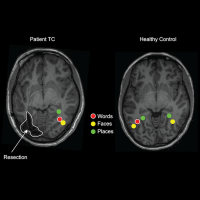
Children can keep full visual perception – the ability to process and understand visual information – after brain surgery for severe epilepsy, according to a study funded by the National Eye Institute (NEI), part of the National Institutes of Health.
Participants in a phase I/II clinical trial of a new enzyme-based treatment for severe dry eye disease experienced reduced signs of disease and discomfort, according to a paper in Translational Vision Science and Technology.
Research has shown that people who are born blind or become blind early in life often have a more nuanced sense of hearing, especially when it comes to musical abilities and tracking moving objects in space (imagine crossing a busy road using sound alone)
Eating a calcium-rich diet or taking calcium supplements does not appear to increase the risk of age-related macular degeneration (AMD), according to the findings of a study by scientists at the National Eye Institute (NEI).
New research, which appears in the journal Proceedings of the Royal Society B, sheds light on how the damage in the brain caused by a stroke can lead to permanent vision impairment for approximately 265,000 Americans each year.
A small pilot clinical study at the National Eye Institute (NEI) suggests that the drug nitisinone increases melanin production in some people with oculocutaneous albinism type 1B (OCA-1B), a rare genetic disease that causes pale skin and hair and poor vi
Researchers evaluated motor skills and cognitive development, visual and hearing function, and brain images of children who had been exposed to the Zika virus during their mothers' pregnancies. 14.5 percent of children had at least one abnormality.