Thanks to the work of NEI scientists and grantees, we’re constantly learning new information about the causes and treatment of vision disorders. Get the latest updates about their work — along with other news about NEI.
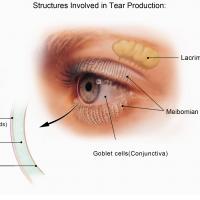
Recent strides toward understanding dry eye are leading to better and longer-lasting therapies for the millions of people in the U.S. who are affected by the condition.
Monthly eye injections of Avastin (bevacizumab) are as effective as the more expensive drug Eylea (aflibercept) for the treatment of central retinal vein occlusion (CRVO), according to a clinical trial funded by the National Eye Institute (NEI)...
Systemic therapy consisting of corticosteroids and immunosuppressants preserved vision of uveitis patients better – and had fewer adverse outcomes – than a long-lasting corticosteroid intraocular implant, according to a clinical trial funded by NEI.
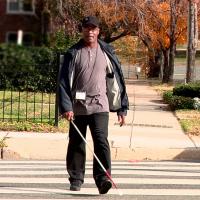
During Low Vision Awareness Month, the National Eye Institute (NEI), part of the National Institutes of Health, is highlighting new technologies and tools in the works to help the 4.1 million Americans living with low vision or blindness.
NEI is funding a 5-year, 60-center clinical trial to evaluate new treatment protocols for herpes zoster ophthalmicus, a form of shingles that can seriously and permanently affect the eye.
Researchers from the U.S. and India have begun a new collaborative project to identify genetic risk factors and traits related to glaucoma, a leading cause of blindness worldwide.
The number of people with visual impairment or blindness in the United States is expected to double to more than 8 million by 2050, according to projections.
The University of Southern California (USC) Roski Eye Institute researchers and clinicians published results of the largest population-based study of adult Latinos and age-related macular degeneration (AMD).