Skip to content

NEI Research News

Thanks to the work of NEI scientists and grantees, we’re constantly learning new information about the causes and treatment of vision disorders. Get the latest updates about their work — along with other news about NEI.

Source
446 items
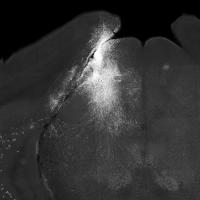
Grayscale slice of mouse brain with neurons highlighted

It’s now or never: Visual events have 100 milliseconds to hit brain target or go unnoticed

Researchers at the National Eye Institute (NEI) have defined a crucial window of time that mice need to key in on visual events.
Images of dry AMD retina

NIH researchers discover tooth-enamel protein in eyes with dry AMD

A protein that normally deposits mineralized calcium in tooth enamel may also be responsible for calcium deposits in the back of the eye in people with dry age-related macular degeneration (AMD).

Four in 10 US Adults Are at High Risk for Vision Loss

In 2017, approximately 93 million US adults aged 18 years or older, or about 4 in 10, were at high risk for vision loss, according to a new study published in JAMA Ophthalmology.
A fundus image

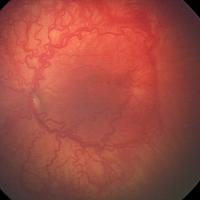
AI may help spot newborns at risk for most severe form of blinding disease

An artificial intelligence (AI) device that has been fast-tracked for approval by the Food and Drug Administration may help identify newborns at risk for aggressive posterior retinopathy of prematurity (AP-ROP). AP-ROP is the most severe form of ROP.
Schematic showing how to produce iPS cells

NIH launches first U.S. clinical trial of patient-derived stem cell therapy to replace and repair dying cells in retina

Researchers at the National Eye Institute (NEI) are launching a clinical trial to test the safety of a novel patient-specific stem cell-based therapy to treat geographic atrophy, the advanced “dry” form of age-related macular degeneration.
NIH National Eye Institute logo

NEI seeks public comment on future research goals

As the year 2020 approaches, the National Eye Institute (NEI) is developing new plans for vision research over the coming decade.
Girl reading book, with hand over one eye

Treatment for common vision disorder does not improve children’s reading skills

Results from a clinical trial funded by the National Eye Institute (NEI) show that while vision therapy can successfully treat convergence insufficiency (CI) in children, it fails to improve their reading test scores.
eye anatomy graphic

Two commonly used uveitis drugs perform similarly in NIH-funded clinical trial

Methotrexate and the more expensive mycophenolate mofetil performed similarly in a head-to-head clinical trial that compared the two drugs for treating noninfectious uveitis, an eye disease that accounts for up to 15% of blindness in the U. S.
Diagram of RPE cell loss

Report: Dry AMD requires broad, systems biology approach leveraging big data, multiple disciplines

A large-scale, collaborative, systems biology approach is needed to expedite the discovery of treatments for dry age-related macular degeneration (AMD) – a leading cause of blindness among people 65 and older for which is there is no treatment.
7 men look at the camera in a group portrait

NEI Researchers Awarded Grants by the Knights Templar Eye Foundation

The Knights Templar Eye Foundation has awarded two NEI scientists grants to research inherited retinal degenerations, diseases that can cause blindness in early childhood.