Thanks to the work of NEI scientists and grantees, we’re constantly learning new information about the causes and treatment of vision disorders. Get the latest updates about their work — along with other news about NEI.
Researchers at the Max Planck Florida Institute for Neuroscience (MPFI) have uncovered a surprisingly complex yet precisely ordered map of visual space in area V2 of the cortex.
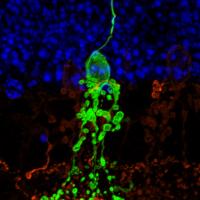
Scientists at the John A. Moran Eye Center at the University of Utah have discovered a new type of nerve cell, or neuron, in the retina. The newly identified Campana cell could play a role in visual signal processing.
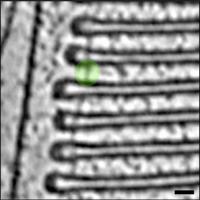
As scientists move closer to testing regenerative therapies for eye disease, techniques are needed to monitor transplanted cells as they integrate with host tissues.
In a pair of papers on retinal structure, Duke University neurobiologists have shown that the rigors of natural selection and evolution have shaped the retinas in our eyes just as this theory of optimization would predict.
Questioning the belief that that people born blind could never truly understand color, a team of cognitive neuroscientists demonstrated that congenitally blind and sighted individuals actually understand it quite similarly.
Members of the Indo-U.S. Vision Research Collaborative Program gathered virtually to look back on the program’s genesis and accomplishments and to plot the program’s future.
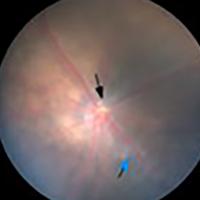
Scientists at St. Jude Children’s Research Hospital have created a laboratory model for studying retinoblastoma driven by inherited mutations in the RB1 gene.
Neural circuits in the primate retina can generate the information needed to predict the path of a moving object before visual signals even leave the eye, UW Medicine researchers demonstrate in a new paper.
Two translational studies at the Vanderbilt Eye Institute are targeting photoreceptors and retinal ganglion cells (RGCs) to restore vision through regeneration of the retina. The research is funded by the NEI Audacious Goals Initiative.
Researchers at the National Institutes of Health have discovered that decisions based on visual information is broadcast widely to neurons in the visual system, including to those that are not being used to make the decision.