Thanks to the work of NEI scientists and grantees, we’re constantly learning new information about the causes and treatment of vision disorders. Get the latest updates about their work — along with other news about NEI.
Working with week-old zebrafish larva, researchers at Weill Cornell Medicine and colleagues decoded how the connections formed by a network of neurons in the brainstem guide the fishes’ gaze.
Too much stuff in the periphery of our vision can make it difficult to identify what we’re seeing. Yale researchers now know how that clutter affects the brain.
New research from the University of Rochester provides important insights into the cellular mechanisms behind AMD and offers potential avenues for new treatments.
New research from UChicago shows that the superior colliculus, a brain region that controls eye movements, also plays an important role in higher cognitive functions like categorization and decision making.
Researchers at the National Eye Institute and their collaborators have identified a protein, known as RNF114, that reverses cataracts, a clouding of the eye’s lens that occurs commonly in people as they age.
The S-index challenge aims to incentivize and reward data sharing by promoting a new metric. Participants will be judged on their proposed methods for calculating the index.
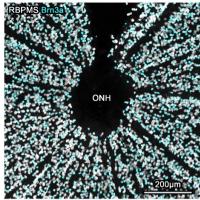
NEI-funded team demonstrates for the first time that cytokines play an important role in the development and regeneration of the retinal cells that degenerate in glaucoma.