Thanks to the work of NEI scientists and grantees, we’re constantly learning new information about the causes and treatment of vision disorders. Get the latest updates about their work — along with other news about NEI.
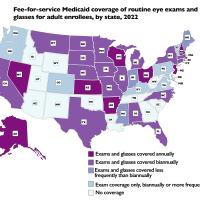
A study supported by the National Institutes of Health (NIH) shows that 6.5 million Medicaid enrollees (12%) lived in states without coverage for routine adult eye exams; and 14.6 million (27%) resided in states without coverage for eyeglasses.
A study led by Georgetown University neuroscientists reveals that the part of the brain that receives and processes visual information in sighted people develops a unique connectivity pattern in people born blind.
Researchers have discovered a connection between levels of specific proteins in patients’ tears and persistent pain months after surgery such as LASIK.
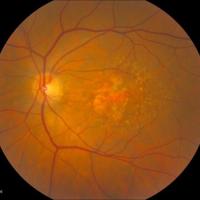
Researchers have found that taking a daily supplement containing antioxidant vitamins and minerals slows progression of late-stage dry age-related macular degeneration (AMD), potentially helping people preserve their central vision.
Scientists from around the world gathered recently in Seattle, Washington, at the annual meeting of the Association for Research in Vision and Ophthalmology (ARVO) to address the global increase in myopia (nearsightedness).
Researchers at the University of Oklahoma Health Sciences and Memorial Sloan Kettering (MSK) Cancer Center are studying a new, revolutionary treatment for diabetic retinopathy that could change the prognosis for these patients.
About 79% of clinical trial participants experienced measurable improvement after receiving experimental, CRISPR-based gene editing that is designed to fix a rare form of blindness.
The National Eye Institute has worked with the editors-in-chief of 7 leading vision journals to create a new two-year program: the Council of Vision Editors Fellowship Program.