Beginning in late July, NIH will start introducing a new website experience designed to make it easier to find health information, research, funding opportunities, and other resources. During the transition, you may notice changes to navigation, page layouts, and where some information is located. Learn more in our Frequently Asked Questions.
Thanks to the work of NEI scientists and grantees, we’re constantly learning new information about the causes and treatment of vision disorders. Get the latest updates about their work — along with other news about NEI.
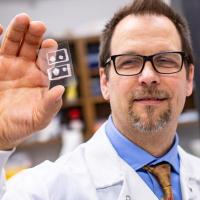
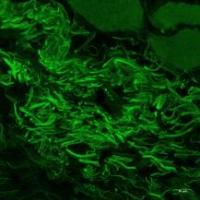
New research by bioengineer David Schmidtke is helping understand how corneal repair cells called keratocytes sometimes result in scarring and blindness.
Participants in a phase I/II clinical trial of a new enzyme-based treatment for severe dry eye disease experienced reduced signs of disease and discomfort, according to a paper in Translational Vision Science and Technology.
NEI funded researchers at the University of Illinois at Chicago have identified an enzyme present in the cornea that trigger inflammation during–and even after–a herpes virus infection. Their results are published in the journal Cell Reports.
Bugs in your eyes may be a good thing. Resident microbes living on the eye are essential for immune responses that protect the eye from infection, new research shows.
Recent strides toward understanding dry eye are leading to better and longer-lasting therapies for the millions of people in the U.S. who are affected by the condition.
An international study of more than 5,417 people helps pinpoint the genetic risk factors associated with Fuchs endothelial corneal dystrophy, the most common disorder requiring corneal transplantation.
A new study funded in part by NEI and published in Nature Communications reveals a mechanism involved in the regulation of a process called lymphangiogenesis, specifically in corneal transplants and infectious eye disease.
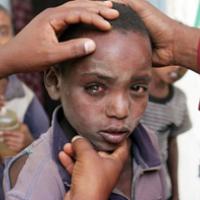
Children who sleep in unventilated rooms with cooking fires are at greater risk for severe trachoma, a leading cause of preventable blindness in developing countries.
Stem cells from the dental pulp of wisdom teeth can be coaxed to turn into cells of the eye’s cornea and could one day be used to repair corneal scarring due to infection or injury.
Ten years after a transplant, a cornea from a 71-year-old donor is likely to remain as healthy as a cornea from a donor half that age, according to the Cornea Donor Study.