Thanks to the work of NEI scientists and grantees, we’re constantly learning new information about the causes and treatment of vision disorders. Get the latest updates about their work — along with other news about NEI.
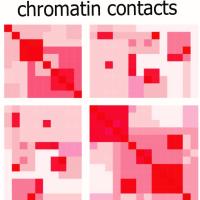
National Eye Institute researchers mapped the organization of human retinal cell chromatin, the fibers that package 3 billion nucleotide-long DNA molecules into compact structures that fit into chromosomes within each cell’s nucleus.
Fulya Yaylacıoğlu Tuncay, M.D., Ph.D., said she gained crucial experience in translational medicine as the first participant in an ocular genetics fellowship program sponsored by NEI and the International Council of Ophthalmology.
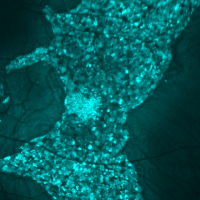
Researchers at the National Eye Institute (NEI) have shown for the first time how cells across different tissue layers in the eye are affected in people with choroideremia, a rare genetic disorder that leads to blindness.
Researchers from the National Eye Institute (NEI) have developed a gene therapy that rescues cilia defects in retinal cells affected by a type of Leber congenital amaurosis (LCA), a disease that causes blindness in early childhood.
Researchers from the National Eye Institute (NEI) have identified a new disease that affects the macula, a small part of the light-sensing retina needed for sharp, central vision.
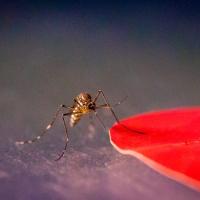
New research led by scientists at the University of Washington indicates that a common mosquito species — after detecting a telltale gas that we exhale — flies toward specific colors, including red, orange, black and cyan.
Scientists at St. Jude Children’s Research Hospital identified distinct functions for regions of a super-enhancer that controls gene expression during retina formation, calling it a ‘modular’ super-enhancer.
Researchers have uncovered the mechanism of vision loss in Usher syndrome, yielding additional drug targets for eventual development of better therapies.