Thanks to the work of NEI scientists and grantees, we’re constantly learning new information about the causes and treatment of vision disorders. Get the latest updates about their work — along with other news about NEI.
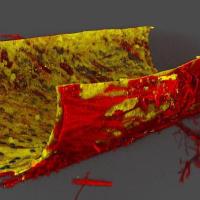
Scientists at the National Institutes of Health (NIH) have leveraged artificial intelligence to transform a device designed to see tissues in the back of the eye into one sharp enough to make out individual cells.
A new study show how the brain’s visual regions play an active role in making sense of information. Crucially, the way it interprets the information depends on what the rest of the brain is working on.
Research funded by the National Eye Institute offers insight into what is happening in our brains when our working memory must use its limited resources to remember multiple things.
Brown University researchers have identified a promising new approach that may help to restore vision in people affected by macular degeneration and other retinal disorders.
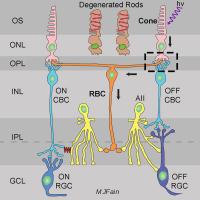
New studies in rats suggest the drug reserpine, approved in 1955 for high blood pressure, might treat the blinding disease retinitis pigmentosa. No therapy exists for this rare inherited disease, which starts affecting vision from childhood.
Researchers at the National Institutes of Health (NIH) have developed eye drops that extend vision in animal models of a group of inherited diseases that lead to progressive vision loss in humans, known as retinitis pigmentosa.
Researchers have developed lab-grown pig retinal organoids to test stem cell replacement therapies for diseases that damage the eye's light-sensing photoreceptors.