Thanks to the work of NEI scientists and grantees, we’re constantly learning new information about the causes and treatment of vision disorders. Get the latest updates about their work — along with other news about NEI.
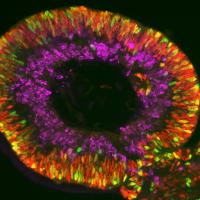
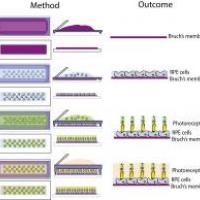
A proposal to create a living model of the human retina, the light-sensitive tissue at the back of the eye, won $90,000 in the National Eye Institute (NEI) 3-D Retina Organoid Challenge (3-D ROC).
Cells within an injured mouse eye can be coaxed into regenerating neurons and those new neurons appear to integrate themselves into the eye’s circuitry, new research shows.
A solar eclipse will be visible across North America for 2 to 3 hours on Monday, August 21, 2017. Watching the moon slowly block out the sun is a rare opportunity but should be attempted with caution.
Bugs in your eyes may be a good thing. Resident microbes living on the eye are essential for immune responses that protect the eye from infection, new research shows.
Research funded by the National Eye Institute aims to reverse progression of cataracts—the most common cause of blindness worldwide—or to prevent them from forming altogether.
Recent strides toward understanding dry eye are leading to better and longer-lasting therapies for the millions of people in the U.S. who are affected by the condition.
Six biological pigments called rhodopsins play well-established roles in light-sensing in the fruit fly eye. Three of them also have light-independent roles in temperature sensation.
Monthly eye injections of Avastin (bevacizumab) are as effective as the more expensive drug Eylea (aflibercept) for the treatment of central retinal vein occlusion (CRVO), according to a clinical trial funded by the National Eye Institute (NEI)...
Systemic therapy consisting of corticosteroids and immunosuppressants preserved vision of uveitis patients better – and had fewer adverse outcomes – than a long-lasting corticosteroid intraocular implant, according to a clinical trial funded by NEI.
The National Eye Institute (NEI), part of the National Institutes of Health, has opened the first stage of a federal prize competition designed to generate miniature, lab-grown human retinas.