Skip to content

NEI Research News

Thanks to the work of NEI scientists and grantees, we’re constantly learning new information about the causes and treatment of vision disorders. Get the latest updates about their work — along with other news about NEI.

Source
234 items
National Eye Institute logo.

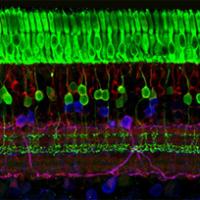
Emerging technologies look deeper into the eyes to catch signs of disease

If you’ve ever been sleep-deprived, you’ve probably had a firsthand glimpse of the blood vessels in your eyes.
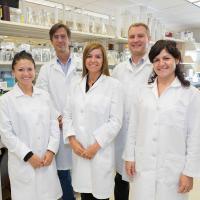
Group of 5 scientists in a laboratory.

Mechanism that allows bacteria to infect plants may inspire cure for eye disease

By borrowing a tool from bacteria that infect plants, scientists have developed a new approach to eliminate mutated DNA inside mitochondria—the energy factories within cells.
National Eye Institute logo.

NEI-funded Scientists Create "New Eye Tissues" from Blood Cells in a Petri Dish

Researchers recently demonstrated that human blood cells can be converted into a variety of eye cells important for vision.
National Eye Institute logo.

Laser Treatment for Vision Loss from Branch Retinal Vein Occlusion is Safer than Corticosteroid Injections and Equally Effective

Scientists have found that laser therapy is equivalent to two different dosages of corticosteroid medications for treating vision loss from the blockage of small veins in the back of the eye, a condition known as branch retinal vein occlusion (BRVO).
National Eye Institute logo.

Reviving Vision

Millions of light-sensitive cells called photoreceptors fill the delicate tissue in the eye known as the retina. These cells include rods that provide night vision and cones that detect color.
National Eye Institute logo.

Omega-3 Fatty Acids Protect Eyes Against Retinopathy, Study Finds

Omega-3 polyunsaturated fatty acids protect against the development and progression of retinopathy, a deterioration of the retina, in mice. This is the major finding of a study that appears in the July 2007 issue of the journal Nature Medicine.
National Eye Institute logo.

Blind Mice Recover Visual Responses Using Protein from Green Algae

Nerve cells that normally are not light sensitive in the retinas of blind mice can respond to light when a green algae protein called channelrhodopsin-2 (ChR2) is inserted into the cell membranes according to a National Institutes of Health...
National Eye Institute logo.

Stem Cell Procedure Protects Mice from Degenerative Retinal Diseases; May Be Promising for People with Similar Retinal Diseases

An experimental 'rescue' of retinas by treating eyes with certain stem cells has been shown to preserve visual function in mice that were genetically predisposed to degenerative diseases of the retina.
National Eye Institute logo.

Early Treatment of Blinding Eye Disease in Infants Can Prevent Severe Vision Loss

An important clinical trial, sponsored by the National Eye Institute(NEI), a part of the National Institutes of Health (NIH), has provided doctors with improved prognostic indicators and treatment options for retinopathy of prematurity.
National Eye Institute logo.

Oxygen Restrictions Can Be Eased for Premature Infants with Blinding Eye Disease

Modest supplemental oxygen given to premature infants with moderate cases of retinopathy of prematurity (ROP), a potentially blinding eye disorder, may not significantly improve ROP, but definitely does not make it worse, according to researchers funded