Thanks to the work of NEI scientists and grantees, we’re constantly learning new information about the causes and treatment of vision disorders. Get the latest updates about their work — along with other news about NEI.
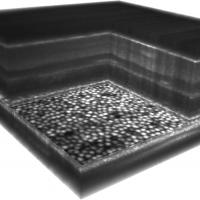
The brain’s visual centers must be adept at filtering out noise from retinal cells to get to the true signal, and those filters have to constantly adapt. Prosthetic retinas are going to need this same filtering to succeed, NEI-funded research shows.
Researchers funded by the National Eye Institute show in a mammalian model the reprogramming of heritability to promote disease resilience in the next generation.
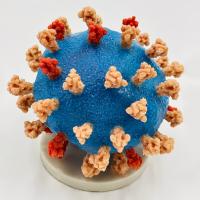
A study of a gateway receptor for SARS-CoV-2 from Louisiana State University may help explain the wide variety of symptoms and organs involved with SARS-CoV-2 infection and COVID-19.
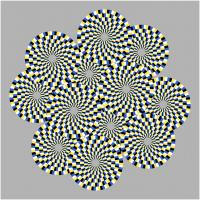
Why people perceive motion in some static images has mystified not only those who view these optical illusions but neuroscientists who have tried to explain the phenomenon. Now Yale neuroscientists have found some answers in the eyes of flies.
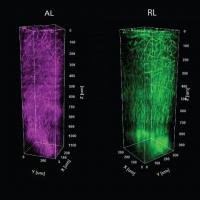
A new study by a team of neuroscientists has discovered that one specific region, the occipital cortex, plays a causal role in piloting our attention to manage the intake of images.
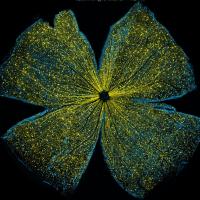
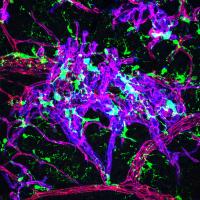
When the eye isn’t getting enough oxygen in the face of common conditions like premature birth or diabetes, it can result in blindness. Scientists have identified new points where they may be able to enable recovery.
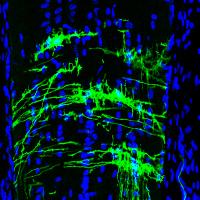
A National Eye Institute-funded study has identified a type of stem cell called a neural progenitor cell, in a region of the optic nerve, which connects the eye to the brain.
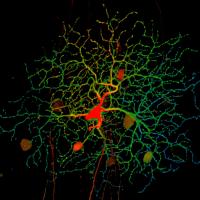
University of Michigan researchers have dramatically reduced the power requirements of neural interfaces while improving their accuracy—a discovery that could lead to long-lasting brain implants.