Thanks to the work of NEI scientists and grantees, we’re constantly learning new information about the causes and treatment of vision disorders. Get the latest updates about their work — along with other news about NEI.
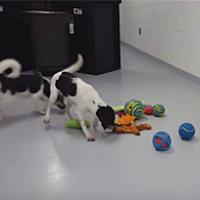
Gene therapy preserved vision in a study involving dogs with naturally occurring, late-stage retinitis pigmentosa, according to research funded by the National Eye Institute (NEI), part of the National Institutes of Health.
The National Eye Institute (NEI), part of NIH, has appointed three new members to the National Advisory Eye Council (NAEC) who are attending their first NAEC meeting as council members today.
Researchers funded by the National Institutes of Health have developed a novel mouse model for the vision disorder Leber hereditary optic neuropathy (LHON), and found that they can use gene therapy to improve visual function in the mice.
People with a genetic predisposition for age-related macular degeneration (AMD) significantly increased their odds of developing the blinding eye disorder if they had a history of smoking and did not exercise or eat enough fruits and vegetables.
Following the 2014 Ebola outbreak in West Africa that took the lives of more than 11,200 people in the region, the National Eye Institute, part of the National Institutes of Health, has deployed a team of clinicians and technical experts to Monrovia...
When we move our head, the whole visual world moves across our eyes. Yet we can still make out a bee buzzing by or a hawk flying overhead, thanks to unique cells in the eye called object motion sensors.
While some research suggests that a diet high in omega-3 fatty acids can protect brain health, a large clinical trial by researchers at the National Institutes of Health found that omega-3 supplements did not slow cognitive decline in older persons.
Loss or defects of a protein previously shown to play a key a role in cataract, the clouding of the lens that commonly strikes people in their seventies, has now been shown to contribute to presbyopia.
When people lose the ability to see, how do the visual parts of the brain change in response? And if they regain their sight, are the changes reversed?