Skip to content

NEI Research News

Thanks to the work of NEI scientists and grantees, we’re constantly learning new information about the causes and treatment of vision disorders. Get the latest updates about their work — along with other news about NEI.

Source
490 items
Two boys smile at the camera. Asymmetric dark spots block parts of the image, representing vision loss from diabetic retinopathy.

AI algorithms detect diabetic eye disease inconsistently

Researchers from UW Medicine have found that artificial intelligence-based screening algorithms to diagnose diabetic retinopathy do not perform as well as they claim.
Dr. Emily Chew of the National Eye Institute examines a patient’s eyes. Photo credit: National Eye Institute.

Routine eye scans may give clues to cognitive decline in diabetes

Scientists at Joslin Diabetes Center now have shown that routine eye imaging can identify changes in the retina that may be associated with cognitive disorders in older people with type 1 diabetes.
Fundus photo showing medium drusen

VisionQuest Gains FDA 510(k) Clearance for the Image Quality Analyzer Software

The IQA is a software system intended for use in importing, displaying, analyzing and managing images acquired with digital fundus cameras. The patented software detects the most common causes of retinal imaging artifacts.

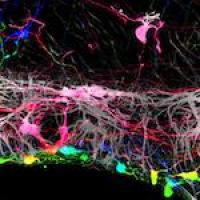
Tracing the many paths of vision

A team of scientists have created a molecular catalog that describes the different types of retinal ganglion cells in zebrafish, linking them to specific connections, functions, and behaviors.
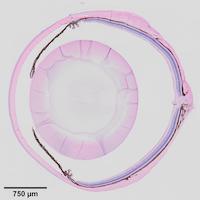
Slice through a 3D eye

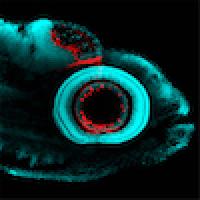
Zika Virus Affects Eye Development Before But Not After Birth

A new study has found that Zika infection during the first trimester of pregnancy can impact fetal retinal development and cause congenital ocular anomalies. The virus does not appear to affect ocular growth postnatally.

Study in mice shows genes may be altered through drug repurposing

Researchers at the University of Illinois Chicago have published a study showing a promising approach to using drug repurposing to treat genetic diseases.

New approach reveals structure and function of individual synapses

An interdisciplinary team of scientists at the Max Planck Florida Institute for Neuroscience have developed a novel approach to measure the activity and strength of individual synapses that drive a neuron’s response to sensory input.

Researchers Discover Clue to How to Protect Neurons and Encourage Their Growth

A multi-university team identified a family of enzymes called GCK-IV kinases whose inhibition is robustly neuroprotective, while also permitting axon regeneration.
3D printed model of Sars-CoV-2

COVID-19 Found in The Cornea: Are Transplants a Transmission Risk?

A multi-institutional study finds that COVID-19 can be found in post-mortem corneal tissue, highlighting the importance of the donor screening process.

Hydrogel Could Open New Path for Glaucoma Treatment Without Drugs or Surgery

Researchers at Georgia Tech have developed a potential new treatment for the eye disease glaucoma that could replace daily eyedrops and surgery with a twice-a-year injection to control the buildup of pressure in the eye.