Thanks to the work of NEI scientists and grantees, we’re constantly learning new information about the causes and treatment of vision disorders. Get the latest updates about their work — along with other news about NEI.
A species of a lipid that naturally helps skin injuries heal appears to also aid repair of common corneal injuries, even when other conditions, like diabetes, make healing difficult, scientists report.
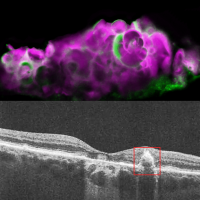
A protein that normally deposits mineralized calcium in tooth enamel may also be responsible for calcium deposits in the back of the eye in people with dry age-related macular degeneration (AMD).
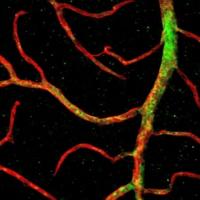
Researchers turn back the biological hands of time, making adult cells revert to a primitive state with the potential to replace and repair retinal blood vessels.
Researchers at UW Medicine have decoded what makes good lighting – lighting capable of stimulating the cone photoreceptor inputs to specific neurons in the eye that regulate circadian rhythms.
New research by bioengineer David Schmidtke is helping understand how corneal repair cells called keratocytes sometimes result in scarring and blindness.
Researchers at the University of Virginia have successfully treated age-related macular degeneration (AMD) in mice after finding an unexpected link between the two main forms of the blinding eye disease.
In a new study from Virginia Tech, neuroscientists reveal a surprising clue about how the intricate visual processing system forms during early brain development.
Researchers at the University of South Florida have discovered a novel feedback pathway from the brain to the eye that modulates eye pressure – a significant advancement in the effort to diagnose and treat glaucoma.