Thanks to the work of NEI scientists and grantees, we’re constantly learning new information about the causes and treatment of vision disorders. Get the latest updates about their work — along with other news about NEI.
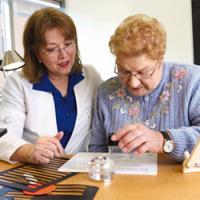
Depression is a common risk for people who have lost their vision from age-related macular degeneration (AMD), but a new study shows that a type of rehabilitation therapy can cut this risk in half.
Telemedicine is an effective strategy to screen for the potentially blinding disease known as retinopathy of prematurity (ROP), according to a study funded by the National Eye Institute (NEI).
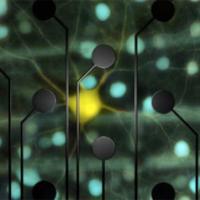
In laboratory tests, researchers have used electrical stimulation of retinal cells to produce the same patterns of activity that occur when the retina sees a moving object.
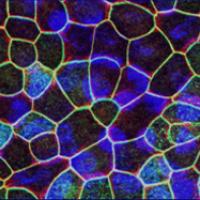
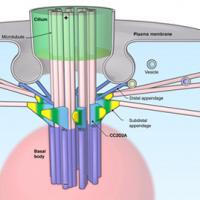
Researchers at the National Eye Institute (NEI) have described the functions of a gene responsible for anchoring cilia — sensory hair-like extensions present on almost every cell of the body.
Researchers at the National Eye Institute (NEI) have found a unique cell type that, in tests on mice, can protect against uveitis—a group of inflammatory diseases that affect the eye and can cause vision loss.
Un nuevo estudio ofrece una explicación de cómo la exposición constante a la luz solar puede aumentar el riesgo de desarrollar cataratas, una opacidad del cristalino que suele ocurrir con la edad.
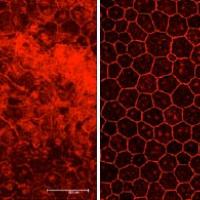
A new study offers an explanation for how years of chronic sunlight exposure can increase the risk of cataract, a clouding of the eye lens that typically occurs with aging.
Frederick L. Ferris III, M.D., and Emily Y. Chew, M.D., who are director and deputy director of the NEI Division of Epidemiology and Clinical Applications, have received the Helen Keller Prize for Vision Research.
An inexpensive glaucoma drug, when added to a weight loss plan, can improve vision for women with a disorder called idiopathic intracranial hypertension (IIH), according to a study funded by the National Institutes of Health.