Skip to content

NEI Research News

Thanks to the work of NEI scientists and grantees, we’re constantly learning new information about the causes and treatment of vision disorders. Get the latest updates about their work — along with other news about NEI.

Source
467 items

Brain wiring is guided by activity even in very early development

Researchers have identified how brain cells begin to coalesce into a wired network in early development before experience has a chance to shape the brain.

U. Washington computational model shows cortical implants unlikely to exceed normal human vision

NIH-funded researchers created a computational model that simulates the experience of a high-resolution implant. Their models suggests implants are unlikely to exceed normal human vision.
decorative

NIH researchers discover potential therapeutic target for degenerative eye disease

Researchers from the National Institutes of Health (NIH) have discovered the source of dysfunction in the process whereby cells in the eye's retina remove waste.
Yu Gongchen, Leor Katz, and Rich Krauzlis in the lab.

NIH researchers discover a new face-detecting brain circuit

Scientists at the National Institutes of Health (NIH) have uncovered a brain circuit in primates that rapidly detects faces.
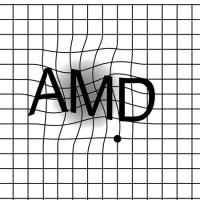
AMD simulation

A new target for treatment of one type of macular degeneration

A new study in mice hints at the promise of an eventual alternative treatment option for the “wet” version of age-related macular degeneration (AMD).

NEI funded study reveals neural mechanism of encoding familiar faces

Faces of familiar individuals with whom one has frequent social interactions with are learned in the basal ganglia region (specifically the tail part of the striatum) through the same neural mechanisms that recognize the value of objects.
2024 Kavli Prize in neuroscience congratulations #NEIfunded awardees

2024 Kavli Prize in Neuroscience awarded for the discovery of 'face areas' in the brain

Three Kavli laureates, with their work on neocortical specialization for face recognition, have provided basic principles of neural organization, which will further our understanding of recognition of objects and scenes.

Discovery in hibernating animals could extend the shelf life of cells and tissues for transplantation  

Research led by scientists at the National Eye Institute and Sun Yat-sen University, Guangzhou, China points to a potential strategy for extending the cold storage shelf life of donor cells and tissues, such as those of the pancreas.
Dr. Han-Yu Shih

DNA loops key for T cell potency

According to a new study from the National Eye Institute (NEI), the configuration of DNA loops in developing immune cells dictates how effectively the cells fight infection.
Elements of successful NIH grant applications

Elements of successful NIH grant applications

Perspective article aims to help beginning scientists develop thoughtful, articulate, compelling, and competitive research proposals.