Thanks to the work of NEI scientists and grantees, we’re constantly learning new information about the causes and treatment of vision disorders. Get the latest updates about their work — along with other news about NEI.
Researchers at the National Institutes of Health applied artificial intelligence (AI) to a technique that produces high-resolution images of cells in the eye. They report that with AI, imaging is 100 times faster and improves image contrast 3.5-fold.
Aqueous Humor Proteome Database includes comprehensive information on 1,683 proteins identified in aqueous humor--the fluid in the eye's anterior chamber.
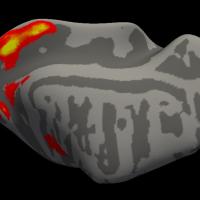
Researchers have found that in dogs, fMRI can detect brain responses to daylight vision for black and white information as well as color information, and identify the area of the visual cortex that responds to stimulation of a cone-rich retinal region.
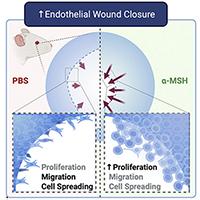
Findings from a pioneering study reveal that administration of the neuropeptide α-melanocyte–stimulating hormone (α-MSH) promotes corneal healing and restores normal eye function.
Researchers at the National Eye Institute have mapped the 3D organization of genetic material of key developmental stages of human retinal formation, using intricate models of a retina grown in the lab.
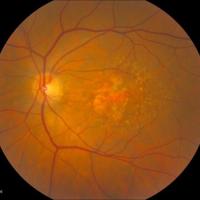
This year, the Food and Drug Administration (FDA) approved Syfovre (pegcetacoplan) and Izervay (avacincaptad pegol), the very first drugs for treating geographic atrophy (GA), also known as late-stage “dry” age-related macular degeneration (AMD).
The National Eye Institute (NEI) has chosen Richard Lee, M.D., Ph.D., as the institute’s clinical director, overseeing clinical research and serving as clinical policy advisor for NEI.