Thanks to the work of NEI scientists and grantees, we’re constantly learning new information about the causes and treatment of vision disorders. Get the latest updates about their work — along with other news about NEI.
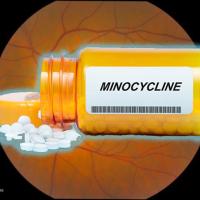
The drug minocycline, an antibiotic that also decreases inflammation, failed to slow vision loss or expansion of geographic atrophy in people with dry age-related macular degeneration (AMD), according to a phase II clinical study.
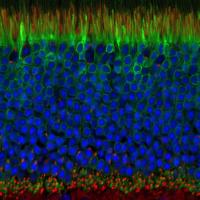
Variant of ALG6 delays rod photoreceptor degradation but decreases cone health in people with RP59 retinitis pigmentosa, according to a new study from University of Alabama, Birmingham.
Findings from a National Eye Institute-supported study show for the first time that when babies look at photos of unfamiliar everyday scenes, such as an office or a lab, they tend to fixate on the same regions where adults find meaning.
Research shows that an artificial intelligence technology developed with NEI funding can accurately and independently detect all severe cases of retinopathy of prematurity.
Researchers at Indiana University School of Optometry found that individuals are at different risks for retinal damage from diabetes, with certain ethnic groups and males being at a greater risk.
A University of Houston optometry researcher is warning against the use of low-level red light (LLRL) therapy as a method to control myopia, or nearsightedness, especially in children.
A new analysis focusing specifically on people of African ancestry identified three gene variants that may be contributing to this population’s susceptibility to developing and being blinded by glaucoma.
A study of children and youth with diabetes concludes that diabetic eye exams using artificial intelligence (AI) increase completion rates of screenings to detect diabetic eye disease.
The National Institutes of Health sponsored its first-ever workshop on cerebral visual impairment (CVI), an umbrella term for subnormal vision resulting from brain injury during development.