Thanks to the work of NEI scientists and grantees, we’re constantly learning new information about the causes and treatment of vision disorders. Get the latest updates about their work — along with other news about NEI.
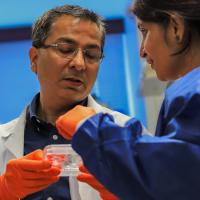
Led by researchers at the National Institutes of Health (NIH), a team of scientists has uncovered the complex molecular mechanisms underlying neurodegenerative disorders linked to the gene PNPLA6.
The National Eye Institute has worked with the editors-in-chief of 7 leading vision journals to create a new two-year program: the Council of Vision Editors Fellowship Program.
Researchers at the National Institutes of Health applied artificial intelligence (AI) to a technique that produces high-resolution images of cells in the eye. They report that with AI, imaging is 100 times faster and improves image contrast 3.5-fold.
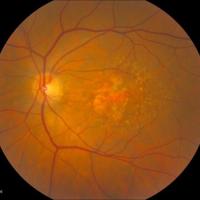
National Eye Institute researchers studying human retinas discovered 87 target genes where a mix of environmental factors likely influence one’s risk of developing age-related macular degeneration (AMD), a leading cause of vision loss.
The drug minocycline, an antibiotic that also decreases inflammation, failed to slow vision loss or expansion of geographic atrophy in people with dry age-related macular degeneration (AMD), according to a phase II clinical study.
The technique, known by the research team as a “monocyte factory,” makes possible a theoretically limitless source of human immune cells for research and the development of therapies for a variety of conditions including eye disease.
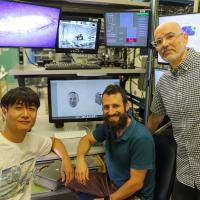
Findings from a National Eye Institute-supported study show for the first time that when babies look at photos of unfamiliar everyday scenes, such as an office or a lab, they tend to fixate on the same regions where adults find meaning.