Thanks to the work of NEI scientists and grantees, we’re constantly learning new information about the causes and treatment of vision disorders. Get the latest updates about their work — along with other news about NEI.
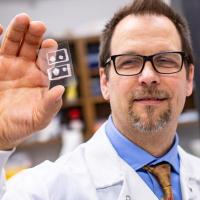
New research by bioengineer David Schmidtke is helping understand how corneal repair cells called keratocytes sometimes result in scarring and blindness.
Researchers at the University of Virginia have successfully treated age-related macular degeneration (AMD) in mice after finding an unexpected link between the two main forms of the blinding eye disease.
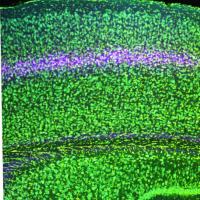
In a new study from Virginia Tech, neuroscientists reveal a surprising clue about how the intricate visual processing system forms during early brain development.
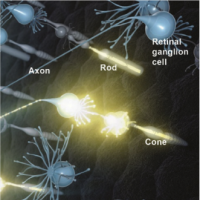
Researchers at the University of South Florida have discovered a novel feedback pathway from the brain to the eye that modulates eye pressure – a significant advancement in the effort to diagnose and treat glaucoma.
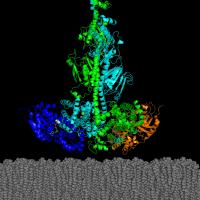
Researchers at the University of New Hampshire have reported the first structural model for a key enzyme, and its activating protein, that can play a role in some genetically inherited eye diseases like retinitis pigmentosa and night blindness.
In a recent study using mice, lab-grown human retinal cells and patient samples, Johns Hopkins Medicine scientists say they found evidence of a new pathway that may contribute to degeneration of the light sensitive tissue at the back of the eye.
Researchers used artificial intelligence (AI) to evaluate stem cell-derived “patches” of retinal pigment epithelium (RPE) tissue for implanting into the eyes of patients with age-related macular degeneration (AMD), a leading cause of blindness.