Thanks to the work of NEI scientists and grantees, we’re constantly learning new information about the causes and treatment of vision disorders. Get the latest updates about their work — along with other news about NEI.
New research by scientists at the Lewis Katz School of Medicine Temple University (LKSOM) shows that gains in functional recovery from optic nerve injuries may be possible, thanks to a molecule known as Lin28, which regulates cell growth.
Nicotinamide, a form of vitamin B3, can inhibit aggressive cell transformations during wound healing and may be key to the development of therapies to treat fibrotic eye diseases that impair vision.
A species of a lipid that naturally helps skin injuries heal appears to also aid repair of common corneal injuries, even when other conditions, like diabetes, make healing difficult, scientists report.
Millions of Americans are progressively losing their sight as cells in their eyes deteriorate, but a new therapy developed by researchers at the University of California, Berkeley, could help prolong useful vision and delay total blindness.
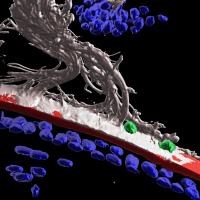
Researchers turn back the biological hands of time, making adult cells revert to a primitive state with the potential to replace and repair retinal blood vessels.
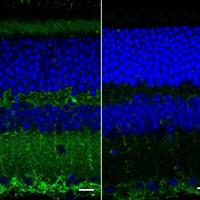
Researchers at Case Western Reserve University have used a unique method to safely deliver gene therapy to fight a rare, but irreversible, genetic eye disorder known as Stargardt disease.
According to a study from Emory University, as young as six days a baby’s brain appears hardwired for the specialized tasks of seeing faces and seeing places.
Neuroscientists at the University of South Florida have become the first to definitively prove pressure in the eye is sufficient to cause and explain glaucoma.