Skip to content

NEI Research News

Thanks to the work of NEI scientists and grantees, we’re constantly learning new information about the causes and treatment of vision disorders. Get the latest updates about their work — along with other news about NEI.

Source
467 items
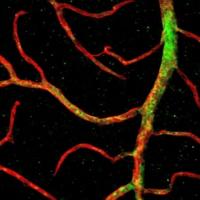
Mouse retinal blood vessels

How neurons build a 3-D vascular structure to keep the retina healthy

Researchers at UC San Francisco have found a new type of neuron that guides the formation of a lattice of blood vessels nourishes cells in the retina.
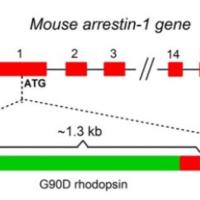
Schematic of Mouse arrestin-1 gene.

Study suggests high-frequency electrical ‘noise’ results in congenital night blindness

Findings from mouse study indicate how one mutation of rhodopsin may cause congenital stationary night blindness in humans.
Illustration of a DNA spiral

Scientists unravel genetic basis for neurodegenerative disorders that affect vision

Led by researchers at the National Institutes of Health (NIH), a team of scientists has uncovered the complex molecular mechanisms underlying neurodegenerative disorders linked to the gene PNPLA6.
fundus photo showing diabetic retinopathy

Wayne State University receives NIH grant to combat sight damage from diabetes

A five-year grant will fund research investigating biological processes that contribute to defects in immune response in the eyes of those with diabetes and identify methods to reverse them.

New fellowship program aims to further understanding of the publication process

The National Eye Institute has worked with the editors-in-chief of 7 leading vision journals to create a new two-year program: the Council of Vision Editors Fellowship Program.

Are these newly found rare cells a missing link in color perception?

Researchers used an imaging technology called adaptive optics to identify rare cells that could help fill in the gaps in existing theories of color perception.
Optic nerve

Seeing a path to nerve regeneration

UConn scientists find protein that stimulates regrowth of optic nerve cells.
mosquito

Wayne State University researchers uncover potential treatment targets for Zika virus-related eye abnormalities

A groundbreaking study from Wayne State presents crucial insights into the ocular effects of Zika virus infection during pregnancy and offers promising avenues for therapeutic intervention.

NEI study points to ‘ground zero’ for AMD development

National Eye Institute researchers studying human retinas discovered 87 target genes where a mix of environmental factors likely influence one’s risk of developing age-related macular degeneration (AMD), a leading cause of vision loss.
Contact lens with special edges on a person's eye.

Federal grants awarded to develop tech to monitor, treat chronic eye diseases

Purdue research teams will develop specialized smart soft contact lenses that continuously monitor or treat chronic ocular diseases like glaucoma, corneal neovascularization and dry eye syndromes.