Thanks to the work of NEI scientists and grantees, we’re constantly learning new information about the causes and treatment of vision disorders. Get the latest updates about their work — along with other news about NEI.
Researchers at the UC Davis Department of Biomedical Engineering have come up a with a new, rapid method for characterizing and calibrating spectrometers, based on how they respond to noise.
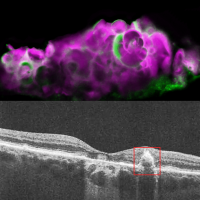
Biomedical engineers at Duke University have devised a new imaging device capable of measuring the various layers of the retina at the back of the eye, which could be used to detect Alzheimer's disease.
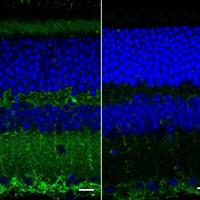
A protein that normally deposits mineralized calcium in tooth enamel may also be responsible for calcium deposits in the back of the eye in people with dry age-related macular degeneration (AMD).
Researchers at the Salk Institute and UC San Diego discover a way to make electron microscopy more detailed and precise by visualizing the activation of brain circuits over long distances.
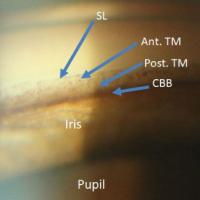
Using methods originally developed by astronomers to view stars more clearly through Earth's atmosphere, optometry researchers at Indiana University have taken the first undistorted microscopic images of a part of the eye involved in glaucoma.
Cells of the retinal pigment epithelium (RPE) form unique patterns that can be used to track changes in this important layer of tissue in the back of the eye, researchers at the National Eye Institute (NEI) have found.