Thanks to the work of NEI scientists and grantees, we’re constantly learning new information about the causes and treatment of vision disorders. Get the latest updates about their work — along with other news about NEI.
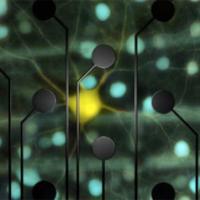
A neuroscience study provides new insight into the primal brain circuits involved in collision avoidance, and perhaps a more general model of how neurons can participate in networks to process information and act on it.
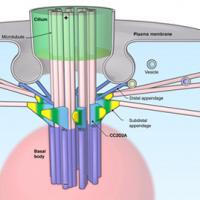
Researchers at the National Eye Institute (NEI) have described the functions of a gene responsible for anchoring cilia — sensory hair-like extensions present on almost every cell of the body.
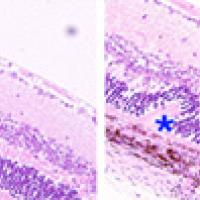
Researchers at the National Eye Institute (NEI) have found a unique cell type that, in tests on mice, can protect against uveitis—a group of inflammatory diseases that affect the eye and can cause vision loss.
Un nuevo estudio ofrece una explicación de cómo la exposición constante a la luz solar puede aumentar el riesgo de desarrollar cataratas, una opacidad del cristalino que suele ocurrir con la edad.
A new study offers an explanation for how years of chronic sunlight exposure can increase the risk of cataract, a clouding of the eye lens that typically occurs with aging.
Biologists at UC San Diego discovered that the ability of our brains to figure out and process directional movements is a result of the activation in the cortex of signals that originate from the direction-sensing cells in the retina.
The unusual arrangement of cells in a chicken's eye constitutes the first known biological occurrence of a potentially new state of matter known as “disordered hyperuniformity,” according to researchers.
A new study indicates that it may be possible to accurately characterize complete neural networks by recording the activity of properly selected samples of 50 neurons or less - an alternative that is much easier to realize.