Skip to content

NEI Research News

Thanks to the work of NEI scientists and grantees, we’re constantly learning new information about the causes and treatment of vision disorders. Get the latest updates about their work — along with other news about NEI.

Source
467 items

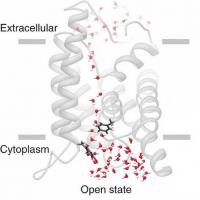
Researchers get close-up view of water pores needed in the eye's lens

Researchers have achieved dynamic, atomic-scale views of a protein needed to maintain the transparency of the lens in the human eye.
National Eye Institute logo.

Targeting cholesterol buildup in eye may slow age-related vision loss

Targeting cholesterol metabolism in the eye might help prevent a severe form of age-related macular degeneration (AMD), one of the most common causes of blindness in older Americans.
National Eye Institute logo.

Seven genetic risk factors found to be associated with common eye disorder

An international group of researchers has discovered seven new regions of the human genome—called loci-that are associated with increased risk of age-related macular degeneration (AMD), a leading cause of blindness.
National Eye Institute logo.

Retinal Device Restores Sight in Mice

Researchers have developed a new prosthetic technique that can restore vision to blind mice. The approach could potentially be further developed to improve sight in blind people.
National Eye Institute logo.

NEI-funded Scientists Create "New Eye Tissues" from Blood Cells in a Petri Dish

Researchers recently demonstrated that human blood cells can be converted into a variety of eye cells important for vision.
National Eye Institute logo.

Additional Genes Associated with Age-Related Macular Degeneration Identified

A large genetic study of age-related macular degeneration (AMD) has identified three new genes associated with this blinding eye disease-two involved in the cholesterol pathway.
National Eye Institute logo.

Stem Cell Procedure Protects Mice from Degenerative Retinal Diseases; May Be Promising for People with Similar Retinal Diseases

An experimental 'rescue' of retinas by treating eyes with certain stem cells has been shown to preserve visual function in mice that were genetically predisposed to degenerative diseases of the retina.