Thanks to the work of NEI scientists and grantees, we’re constantly learning new information about the causes and treatment of vision disorders. Get the latest updates about their work — along with other news about NEI.
Babies born prematurely who require treatment to prevent blindness from retinopathy of prematurity (ROP) could be treated with a dose of Avastin (bevacizumab) that is a fraction of the dose commonly used for ROP currently.
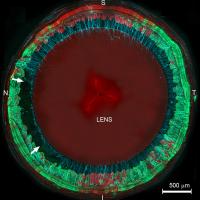
National Eye Institute (NEI) researchers profiling epigenomic changes in light-sensing mouse photoreceptors have a clearer picture of how age-related eye diseases may be linked to age-related changes in the regulation of gene expression.
Researchers have discovered a technique for directly reprogramming skin cells into light-sensing rod photoreceptors used for vision. The lab-made rods enabled blind mice to detect light after the cells were transplanted into the animals’ eyes.
According to a recent analysis of data from two major eye disease studies, adherence to the Mediterranean diet – high in vegetables, whole grains, fish, and olive oil – correlates with higher cognitive function.
Nicotinamide, a form of vitamin B3, can inhibit aggressive cell transformations during wound healing and may be key to the development of therapies to treat fibrotic eye diseases that impair vision.
A species of a lipid that naturally helps skin injuries heal appears to also aid repair of common corneal injuries, even when other conditions, like diabetes, make healing difficult, scientists report.
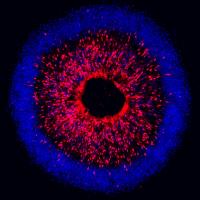
A protein that normally deposits mineralized calcium in tooth enamel may also be responsible for calcium deposits in the back of the eye in people with dry age-related macular degeneration (AMD).
Millions of Americans are progressively losing their sight as cells in their eyes deteriorate, but a new therapy developed by researchers at the University of California, Berkeley, could help prolong useful vision and delay total blindness.