Thanks to the work of NEI scientists and grantees, we’re constantly learning new information about the causes and treatment of vision disorders. Get the latest updates about their work — along with other news about NEI.
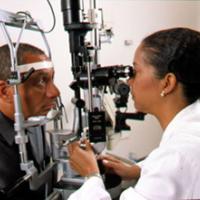
A team of University of Arizona researchers has received a five-year, $4.1 million grant to study whether using eyeglasses to correct astigmatism in toddlers improves language, cognitive and motor development.
A study from the University of Pennsylvania suggests efforts in the past decade to reduce the invasiveness and recovery time for ocular procedures have not impacted opioid use.
Methotrexate and the more expensive mycophenolate mofetil performed similarly in a head-to-head clinical trial that compared the two drugs for treating noninfectious uveitis, an eye disease that accounts for up to 15% of blindness in the U. S.
Using a canine model of the vision disorder Leber congenital amaurosis, Penn researchers found that photoreceptor cells continue to deteriorate after treatment if it is given too late.
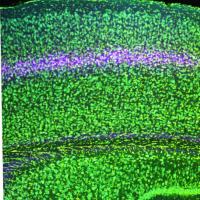
Researchers at the Max Planck Florida Institute for Neuroscience uncovered a diverse palette of inhibition within layer 2/3 of the visual cortex, suggestive of a more complex functional connectivity that may allow for enhanced flexibility of...
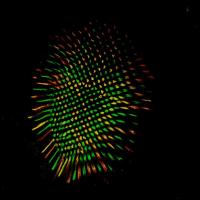
Biomedical engineers at Duke University have devised a method for increasing the resolution of optical coherence tomography (OCT) down to a single micrometer scale in all directions.
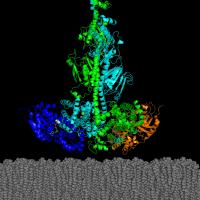
Targeting specific areas of the measles virus polymerase, a protein complex that copies the viral genome, can effectively fight the measles virus and be used as an approach to developing new antiviral drugs to treat the serious infectious disease...
People who spend eight or more hours a day staring at a computer screen may notice their eyes becoming tired or dry, and, if those conditions are severe enough, they may eventually develop dry eye disease (DED).