Thanks to the work of NEI scientists and grantees, we’re constantly learning new information about the causes and treatment of vision disorders. Get the latest updates about their work — along with other news about NEI.
A pilot study of 106 patients with “wet” AMD revealed that nearly half of patients treated with Eylea could safely stop therapy after one year, compared to only 17% of patients treated with Avastin.
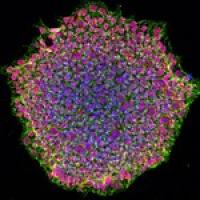
Rogue clinics offer stem cell-based therapies that haven’t been tested for safety and efficacy. When communicating to the public about stem cell-based therapies, it is important to put any treatment claims in context.
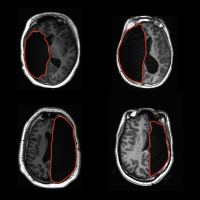
An unprecedented study of brain plasticity and visual perception found that people who, as children, had undergone surgery removing half of their brain correctly recognized differences between pairs of words or faces more than 80% of the time.
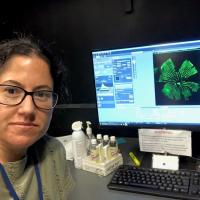
Fulya Yaylacıoğlu Tuncay, M.D., Ph.D., said she gained crucial experience in translational medicine as the first participant in an ocular genetics fellowship program sponsored by NEI and the International Council of Ophthalmology.
The patient received the therapy as part of a clinical trial that is the first in the United States to use replacement tissues from patient-derived induced pluripotent stem cells.
Using a new imaging technique, researchers from the National Eye Institute have determined that retinal lesions from vitelliform macular dystrophy (VMD) vary by gene mutation.
Black patients have a dramatically higher risk of advanced vision loss after a new diagnosis of primary open angle glaucoma (POAG) when compared to white patients, according to a new study from New York Eye and Ear Infirmary of Mount Sinai (NYEE).