Because of a lapse in government funding, the information on this website may not be up to date, transactions submitted via the website may not be processed, and the agency may not be able to respond to inquiries until appropriations are enacted. The NIH Clinical Center (the research hospital of NIH) is open. For more details about its operating status, please visit cc.nih.gov. Updates regarding government operating status and resumption of normal operations can be found at OPM.gov.
Thanks to the work of NEI scientists and grantees, we’re constantly learning new information about the causes and treatment of vision disorders. Get the latest updates about their work — along with other news about NEI.
January is Glaucoma Awareness Month. The National Eye Institute, part of NIH, is highlighting key facts about this blinding disease, important tips for prevention and treatment, and research updates you may not know about.
NEI is funding a 5-year, 60-center clinical trial to evaluate new treatment protocols for herpes zoster ophthalmicus, a form of shingles that can seriously and permanently affect the eye.
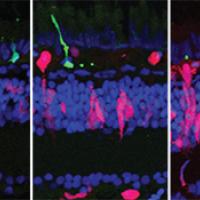
NEI-funded researchers at Columbia University Medical Center have shown that vision loss associated with a form of retinitis pigmentosa can be slowed dramatically by reprogramming the metabolism of photoreceptors, or light sensors, in the retina.
By peering into the eyes of mice and tracking their ocular movements, researchers made an unexpected discovery: the visual cortex – a region of the brain known to process sensory information – plays a key role...
Researchers from the U.S. and India have begun a new collaborative project to identify genetic risk factors and traits related to glaucoma, a leading cause of blindness worldwide.
Researchers at Washington University School of Medicine in St. Louis have identified a pathway involved in harming rods and cones and have found a way to halt that damage.
Today, the National Academies of Sciences, Engineering, and Medicine (the National Academies) released “Making Eye Health A Population Health Imperative: Vision for Tomorrow.