Thanks to the work of NEI scientists and grantees, we’re constantly learning new information about the causes and treatment of vision disorders. Get the latest updates about their work — along with other news about NEI.
A new study funded in part by NEI and published in Nature Communications reveals a mechanism involved in the regulation of a process called lymphangiogenesis, specifically in corneal transplants and infectious eye disease.
Researchers and clinicians at the University of Southern California Roski Eye Institute have published results of the NEI-funded “Chinese American Eye Study” in JAMA Ophthalmology.
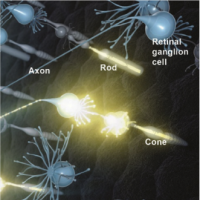
Diabetes-related vision loss most often is blamed on blood vessel damage in and around the retina, but new research indicates that much of that vision loss may result from nerve cell injury that occurs long before any blood vessels are damaged.
Researchers at the University of Pennsylvania showed that in a form of canine blindness retinal cells continue to differentiate for a period of time early in a dog’s life before overwhelming cell death caused the retina to degenerate.
Making the most of the low light in the muddy rivers where it swims, the elephant nose fish survives by being able to spot predators amongst the muck with a uniquely shaped retina, the part of the eye that captures light.
Researchers at LSU Health New Orleans have shown that a protein critical to the body’s ability to remove waste products from the brain and retina is diminished in age-related macular degeneration.
Andrew Butler may be one of the hardest working people at NIH. He has to be, because he works at the NIH Central Animal Facility—home to the many rodents and other laboratory animals that are a vital part of NIH research.
A two-year clinical trial that compared three drugs for diabetic macular edema (DME) found that gains in vision were greater for participants receiving the drug Eylea (aflibercept) than for those receiving Avastin (bevacizumab).